

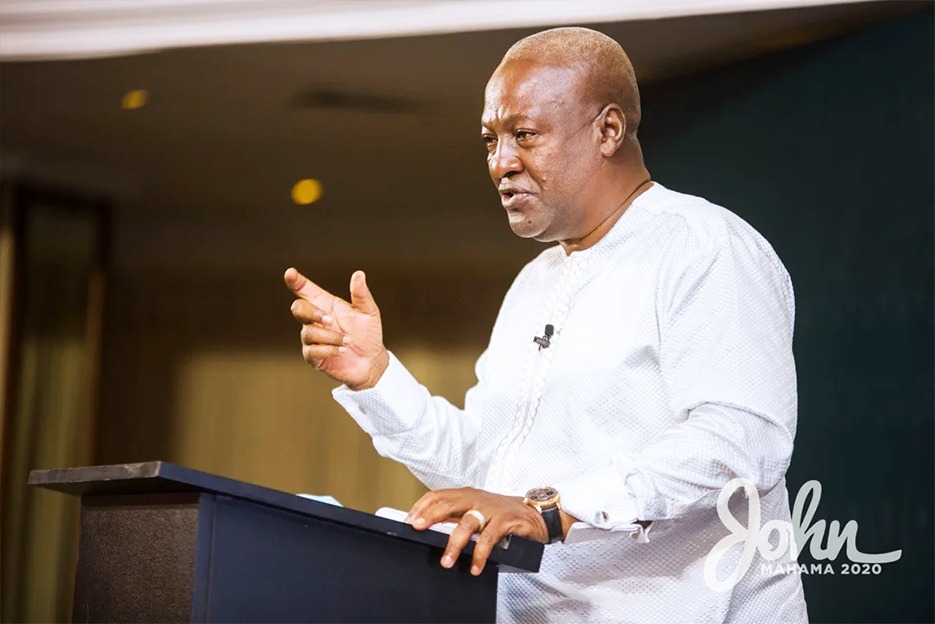
Mahama Advances 24-Hour Economy Vision with Ground-Breaking Asesewa Market
Former President John Dramani Mahama has taken a major step toward realizing his flagship 24-hour economy vision, unveiling a state-of-the-art, round-the-clock market in Asesewa, a bustling town in Ghana’s Eastern Region. The project, which draws widespread attention from local traders, policymakers, and economic analysts, is designed to eliminate traditional market hour restrictions and unlock new income streams for small-scale vendors.
What Is the 24-Hour Economy Vision?
Mahama first outlined the 24-hour economy concept during his 2024 presidential campaign, framing it as a transformative policy to shift Ghana from an 8-hour workday, 5-day workweek model to a system that supports economic activity around the clock.
The core goal is to maximize underutilized evening and nighttime hours, create more jobs, and boost national productivity by enabling businesses across sectors — from retail and hospitality to manufacturing and logistics — to operate longer hours with government support.
Key Pillars of the 24-Hour Economy
- Extended operating hours for public services, markets, and small businesses
- Subsidized electricity tariffs for round-the-clock enterprises
- Enhanced security and street lighting for nighttime economic activity
- Targeted training programs for vendors and small business owners
- Streamlined licensing processes for 24-hour operations
Why Asesewa? The Strategic Choice for the Pilot Market
Asesewa, the district capital of the Upper Manya Krobo District, was selected as the pilot site for the first full-scale 24-hour market for several strategic reasons. The town serves as a major trading hub for surrounding rural communities, with a high volume of cross-border trade from neighboring Togo and Benin.
Local traders previously faced strict 6PM closing times, which forced many to sell goods on the black market after hours or lose unsold perishable stock. The new Asesewa market eliminates these barriers, offering 500 fully equipped stalls that operate 24/7, complete with 24-hour electricity, sanitation facilities, and on-site security.
Key Features of the Asesewa 24-Hour Market
- 500 weather-proof stalls with individual storage units for vendors
- 24/7 CCTV surveillance and dedicated police post
- Solar-powered street lighting across the entire market complex
- Dedicated cold storage zones for perishable goods like vegetables, fish, and meat
- On-site digital payment kiosks and mobile money agents
- Separate sections for wholesale and retail traders to reduce congestion
Early Impact on Local Traders and the Economy
Early feedback from vendors who have already moved into the new market has been overwhelmingly positive. Ama Darko, a vegetable seller who has traded in Asesewa for 12 years, told local media: “I used to throw away 30% of my stock every week because I couldn’t sell it before 6PM. Now I can sell until midnight, and my daily income has doubled.”
Beyond individual vendor gains, the market is expected to create over 200 direct jobs for security personnel, cleaners, and market administrators, plus hundreds of indirect jobs in transportation, food service, and logistics supporting the 24-hour operations.
Economic analysts note that if replicated across Ghana’s 261 districts, the 24-hour market model could add up to 2.5% to the country’s annual GDP, per a 2023 World Bank report on Ghana’s informal sector.
Next Steps for the 24-Hour Economy Rollout
Mahama confirmed that the Asesewa market is the first of 10 planned 24-hour markets to be launched in the coming 12 months, with the next sites set to be in Tamale, Kumasi, and Takoradi. The rollout will be funded through a mix of public-private partnerships and donor grants from the African Development Bank.
He also noted that complementary policies — including extended banking hours, 24-hour customs operations at major ports, and nighttime bus services — will be rolled out alongside the market projects to support the full 24-hour economy ecosystem.
Conclusion: A Game-Changer for Ghana’s Informal Sector
The Asesewa market launch marks a tangible shift from campaign promise to on-the-ground policy for Mahama’s 24-hour economy vision. For the millions of Ghanaians working in the informal sector — which accounts for 80% of the country’s employment — the project offers a clear path to higher, more stable incomes.
As the pilot project takes shape, all eyes will be on Asesewa to see if the 24-hour model can deliver on its promise of inclusive, round-the-clock economic growth for Ghana.

Comments are closed, but trackbacks and pingbacks are open.