

York Space Systems Agrees to Buy ALL.SPACE in Push for Multi-Orbit Terminal Capability
The satellite industry is moving fast, and multi-orbit connectivity is quickly becoming the gold standard for reliable, low-latency satellite service. This week, York Space Systems made a major move to cement its position in this growing market: the company announced a definitive agreement to acquire ALL.SPACE, a leading developer of multi-orbit user terminals.
The deal, subject to customary regulatory approvals, will see York integrate ALL.SPACE’s proprietary terminal technology into its existing portfolio of small satellite platforms and space systems, creating a full-stack solution for government and commercial clients.
What the York Space Systems-ALL.SPACE Deal Entails
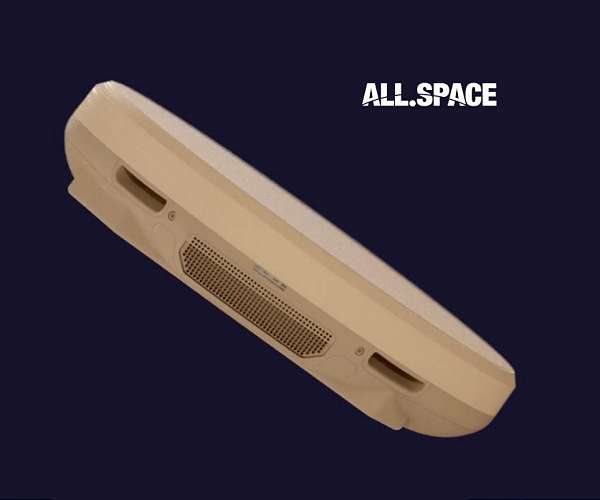
York Space Systems, a Denver-based manufacturer of small satellites for defense, civil, and commercial customers, has signed a binding agreement to purchase UK-based ALL.SPACE. ALL.SPACE is best known for its software-defined, modular user terminals that operate seamlessly across low Earth orbit (LEO), medium Earth orbit (MEO), and geostationary orbit (GEO) satellite networks.
While financial terms of the deal were not disclosed, both companies confirmed the transaction is expected to close in the coming months pending standard regulatory clearances. Once finalized, ALL.SPACE will operate as a wholly owned subsidiary of York Space Systems, retaining its existing leadership team and UK-based R&D facilities.
Why ALL.SPACE? The Value of Multi-Orbit Terminal Tech
ALL.SPACE’s core offering is a game-changer for satellite users: its terminals eliminate the need for separate hardware to connect to different satellite orbits. Traditional terminals are often locked to a single orbit (e.g., only GEO or only LEO), forcing users to deploy multiple devices to access different networks.
ALL.SPACE’s software-defined design allows a single terminal to switch between orbits dynamically, prioritizing LEO for low-latency applications like video calls and remote operations, and GEO for wide-area coverage in remote regions. This flexibility is a major selling point for defense agencies, maritime operators, and commercial aviation providers.
Why Multi-Orbit Terminals Are the Future of Satellite Connectivity
For years, satellite operators have pushed single-orbit solutions: GEO satellites offer broad coverage but high latency, while LEO constellations like Starlink deliver low latency but limited global coverage. Multi-orbit systems combine the best of both worlds, and user terminals are the critical missing link to make this work at scale.
Key use cases for multi-orbit terminals include:
- Defense and military operations: Troops in remote areas can maintain constant connectivity by switching between LEO and GEO networks as needed.
- Commercial maritime and aviation: Ships and planes can access high-speed connectivity across global routes without relying on a single network.
- Enterprise IoT and remote infrastructure: Mining sites, offshore wind farms, and rural cell towers can get reliable, low-latency connectivity for real-time monitoring.
Key Benefits for York Space Systems
This acquisition positions York as a rare end-to-end provider in the satellite market. Here’s how the deal boosts York’s competitive edge:
- Vertical integration: York already builds small satellites and designs space systems; adding user terminals means it can now offer complete, integrated solutions to customers, from satellite manufacturing to ground equipment.
- Faster product development: ALL.SPACE’s existing terminal portfolio will accelerate York’s timeline to launch its own multi-orbit terminal offerings, beating competitors to market.
- Expanded customer base: ALL.SPACE already serves defense agencies and commercial clients across Europe and North America, giving York immediate access to new markets.
- Differentiation from competitors: Unlike providers that focus solely on LEO or GEO solutions, York can now offer multi-orbit flexibility as a core selling point.
What This Means for ALL.SPACE Customers
Existing ALL.SPACE clients won’t see disruption to their current service. In fact, the acquisition will bring added benefits: York’s larger manufacturing scale will speed up terminal production, while integrated satellite-terminal bundles will offer more cost-effective solutions for clients building custom constellations.
Industry Impact and What’s Next
This deal is part of a broader trend of consolidation in the satellite ground segment, as companies race to control the full stack of satellite connectivity. By acquiring ALL.SPACE, York is positioning itself to compete with larger players like SpaceX and Viasat, which already offer integrated satellite and terminal solutions.
Industry analysts expect York to launch its first integrated multi-orbit solutions in early 2025, pairing its small satellite platforms with ALL.SPACE’s terminal technology for dedicated government and commercial constellations.
Conclusion
York Space Systems’ agreement to acquire ALL.SPACE is a strategic bet on the future of multi-orbit connectivity. For customers, this means more flexible, reliable satellite service. For the industry, it’s a sign that end-to-end satellite solutions are becoming the new standard. As satellite connectivity plays a bigger role in global infrastructure, moves like this will shape how we stay connected in even the most remote corners of the planet.

Comments are closed, but trackbacks and pingbacks are open.