

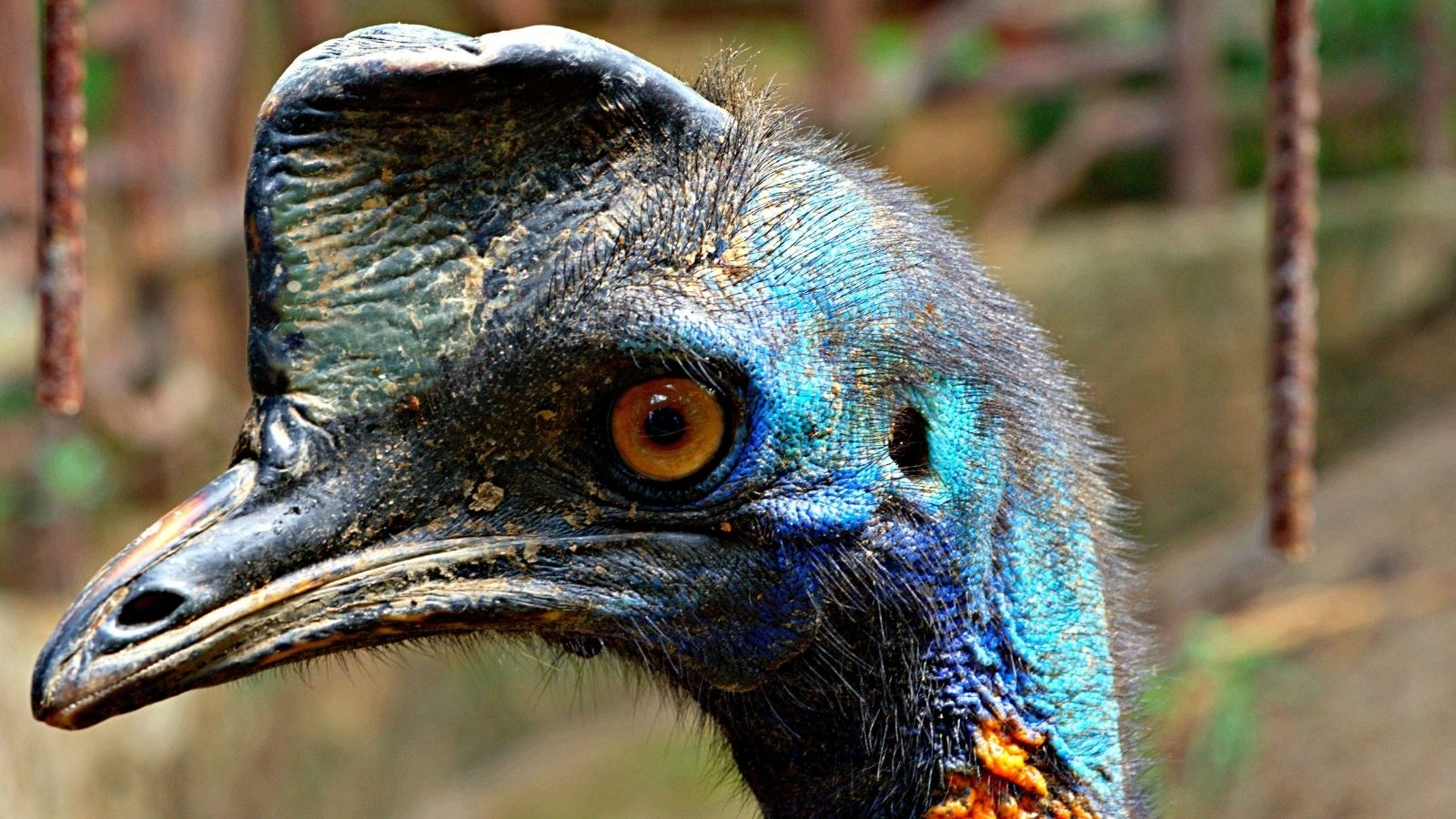
Imagine a bird standing six feet tall, capable of sprinting at fifty kilometres per hour, equipped with five-inch razor-sharp claws that could eviscerate a predator in a single kick. Now imagine this prehistoric-looking creature wandering through the rainforests of Australia and New Guinea, occasionally stopping to eat fruit from the forest floor. This is the cassowary – the world’s most dangerous bird, and surprisingly, one of the most fascinating creatures you’ll ever encounter.
The Deadly Beauty of the Cassowary
The cassowary belongs to a group of flightless birds called ratites, which also includes ostriches and emus. But don’t let the comparison to those relatively docile giants fool you – the cassowary has earned its reputation as the planet’s most perilous avian resident through sheer evolutionary perfection.
What makes this bird so dangerous? The answer lies in its feet. Each foot possesses a modified toe that has evolved into a dagger-like claw reaching up to five inches in length. When threatened, a cassowary can deliver devastating kicks capable of killing or severely injuring humans and predators alike. Combined with their impressive speed – they can sprint at up to fifty kilometres per hour through dense forest undergrowth – these claws make the cassowary a force to be respected.
Anatomy of a Survivor
Standing up to six feet tall and weighing as much as seventy-six kilograms, the southern cassowary is the third-largest living bird on Earth. But size isn’t their only remarkable feature.
Perhaps the most striking aspect of the cassowary’s appearance is its casque – a helmet-like structure atop its head made of keratin. Scientists have debated its purpose for decades. Some believe it acts as a protective helmet while the bird pushes through dense vegetation. Others suggest it helps amplify the bird’s deep, rumbling calls that can travel through the forest canopy. Some researchers even propose it plays a role in attracting mates.
The cassowary’s vibrant colouring adds to its otherworldly appearance. Their necks are a striking combination of blue and purple, transitioning to bright red and orange wattles. Their glossy black plumage contrasts dramatically with these colours, making them appear almost prehistoric – a look that has led some to describe them as "living dinosaurs."
Not All Bad: The Gentle Side of the Dangerous Bird
Despite their deadly reputation, cassowaries are predominantly frugivores – fruit eaters. They play a crucial role in their ecosystem as seed dispersers, consuming large quantities of rainforest fruits and depositing the seeds throughout the forest in their droppings. Some plant species have evolved to rely almost exclusively on cassowaries for reproduction, making these birds essential for maintaining the health of their rainforest homes.
Cassowaries are generally shy and prefer to avoid human contact. Attacks typically occur only when birds feel threatened, cornered, or when people get too close to their eggs or chicks. In their natural habitat, these birds are more likely to flee than fight.
Where to Find the World’s Most Dangerous Bird
Cassowaries inhabit the tropical rainforests of northern Australia and the island of New Guinea. In Australia, they are found primarily in Queensland’s Wet Tropics region, from Cooktown to Townsville. The population is fragmented, with the most reliable sightings occurring in places like the Daintree Rainforest, Cape Tribulation, and the Atherton Tablelands.
In New Guinea, cassowaries are more widespread across the island’s forested regions. They thrive in lowland rainforests but can also be found in higher elevations up to 1,500 metres above sea level.
Conservation Status: A Vulnerable Giant
Despite their fearsome defences, cassowaries face significant threats in the modern world. They are listed as Vulnerable on the IUCN Red List, with their populations declining across their range.
Habitat destruction remains the primary threat to cassowary survival. Deforestation for agriculture, logging, and urban development has fragmented their rainforest homes, isolating populations and reducing their access to food sources. Vehicle strikes kill numerous cassowaries each year, particularly in areas where roads cut through their territory.
Human-wildlife conflict also poses challenges. While cassowaries can be dangerous to humans, the reverse is also true – cassowaries are sometimes killed by people who see them as threats to livestock or personal safety.
Living with the Legend
For those lucky enough to encounter a cassowary in the wild, the experience is unforgettable. These magnificent creatures command respect and inspire awe. The key to safe interactions is simple: maintain a respectful distance, never feed wild cassowaries, and never approach or corner them.
Local conservation organisations in Queensland work tirelessly to protect cassowary habitats and educate communities about coexisting safely with these remarkable birds. Visitors can support these efforts by choosing eco-friendly tours and respecting signage in cassowary territory.
Why We Should Love the Dangerous Bird
The cassowary represents something precious – a living link to prehistoric times, an ecosystem engineer, and a reminder that nature’s most dangerous creatures are often the most misunderstood. Their existence reminds us that beauty and danger can coexist in the same magnificent package.
These ancient birds have survived for millions of years through a combination of physical prowess and ecological importance. They deserve our respect, our protection, and yes – our love. After all, the world would be a far less remarkable place without the towering, clawed, fruit-eating wonder that is the cassowary.
Next time you hear about the world’s most dangerous bird, remember: there’s so much more to the cassowary than its deadly kick. There’s a fascinating creature worth protecting, worth studying, and worth loving.

Comments are closed, but trackbacks and pingbacks are open.