

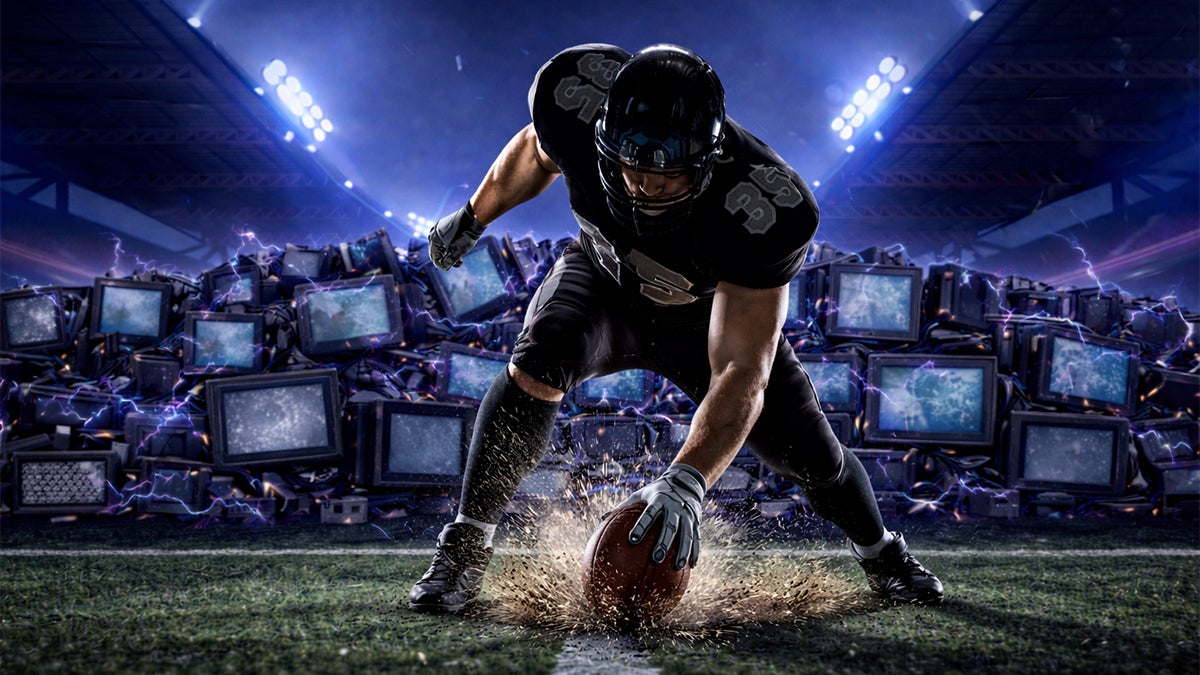
The $110 Billion Squeeze: How NFL’s Seismic Cash Grab Is Reshaping TV
Imagine committing $10 billion a year for a decade just to broadcast football games. That’s the reality for the NFL’s latest media partners, who just finalized a seismic $110 billion rights deal that runs through 2033. This isn’t just a win for the league—it’s a total reset for the TV industry as we know it.
For decades, NFL games were the crown jewel of linear television. Now, this massive cash grab is accelerating the shift to streaming, killing old blackout rules, and forcing networks to rethink how they make money. Here’s exactly how the $110 billion squeeze is changing what you watch, and where you watch it.
What’s in the $110 Billion NFL Media Deal?
The 11-year agreement, signed in 2021 and effective from 2023 to 2033, splits rights between five major partners:
- NBC: Retains Sunday Night Football, the league’s most-watched primetime window, plus Super Bowl coverage in 2026 and 2030.
- CBS: Keeps Sunday afternoon AFC games, adds a second Super Bowl (2028) to its roster.
- Fox: Holds onto Sunday afternoon NFC games, with Super Bowl rights in 2024, 2028, and 2032.
- ESPN/ABC: Keeps Monday Night Football, adds Sunday morning international games, and gains streaming rights for ESPN+.
- Amazon Prime Video: Exclusive rights to Thursday Night Football, marking the first time a streaming service has full control of a primetime NFL window.
All told, the deal averages $10 billion per year—more than double the value of the previous 2014-2022 rights agreement. The NFL gets guaranteed cash regardless of viewership, while partners take on the risk of recouping that massive investment.
How This Cash Grab Is Already Shaking Up TV
Streaming Is Now the Priority, Not the Add-On
For years, streaming NFL games was a bonus for cable subscribers. Now, it’s a core part of the strategy. Amazon paid $1 billion per year for Thursday Night Football alone, and ESPN is pushing more exclusive content to ESPN+ to drive subscriptions. Linear TV still gets the biggest games, but streaming is no longer an afterthought.
This shift means networks are investing billions in streaming infrastructure, not just traditional broadcast equipment. If you want to watch every NFL game, you’ll need at least three separate subscriptions: a cable/satellite package for local games, Prime Video for Thursday nights, and ESPN+ for select international and exclusive matchups.
Blackouts Are All but Dead
Remember when local NFL games were blacked out if they didn’t sell out? That rule is gone for most fans. The new deal requires all games to be available on local broadcast TV in the teams’ home markets, with only rare exceptions for international games. You no longer need a pricey cable package to watch your local team play.
More Games, More Ad Slots, Higher Costs
The deal locks in the NFL’s 17-game regular season, with an option for an 18th game if players approve. More games mean more ad inventory, but networks are also raising ad rates to cover their $10 billion annual bill. Expect more frequent commercial breaks, and higher prices for brands that want to reach NFL audiences.
What This Means for Everyday Fans
You don’t have to be a TV executive to feel the impact of this deal. Here’s how it affects your viewing experience:
- More subscriptions required: There’s no single way to watch every NFL game without paying for multiple services.
- Fewer blackouts: Almost every local game will be available on free over-the-air TV in your area.
- Changing kickoff times: More international games mean earlier Sunday morning kickoffs for U.S. viewers in some weeks.
- Better streaming quality: Partners are spending billions to make sure 4K streams and glitch-free viewing are the norm, not the exception.
The Ripple Effect on the Entire TV Industry
The NFL’s deal isn’t just changing football coverage—it’s resetting the entire media landscape. Other major leagues like the NBA and MLB are already using the $110 billion figure as a benchmark for their own upcoming rights negotiations. Expect their next deals to be far more expensive than past agreements.
Networks are also cutting costs elsewhere to pay for NFL rights. Scripted TV shows, documentaries, and non-sports content are seeing reduced budgets as executives prioritize the one programming that still draws massive, reliable audiences. Streaming services, meanwhile, are using NFL games as loss leaders to hook subscribers, then upselling them on other content.
Is This $110 Billion Deal Sustainable?
Critics argue that $10 billion a year is an unsustainable cost, especially as younger viewers cut the cord and move away from traditional TV. But the NFL’s ratings remain rock-solid: 21 of the 22 most-watched broadcasts in 2023 were NFL games. For now, partners see the investment as a safe bet to keep viewers engaged.
If viewership drops significantly in the next decade, though, networks could be stuck with massive losses. But the NFL has proven remarkably resilient to shifting media habits, making this cash grab one of the safest big bets in TV history.
Conclusion
The NFL’s $110 billion media deal is more than a payday for the league—it’s a turning point for the entire TV industry. Streaming is now the future of football coverage, blackouts are fading into memory, and fans will need to adapt to a more fragmented viewing landscape. One thing is certain: the way you watch NFL games in 2033 will look nothing like it did in 2020.

Comments are closed, but trackbacks and pingbacks are open.