

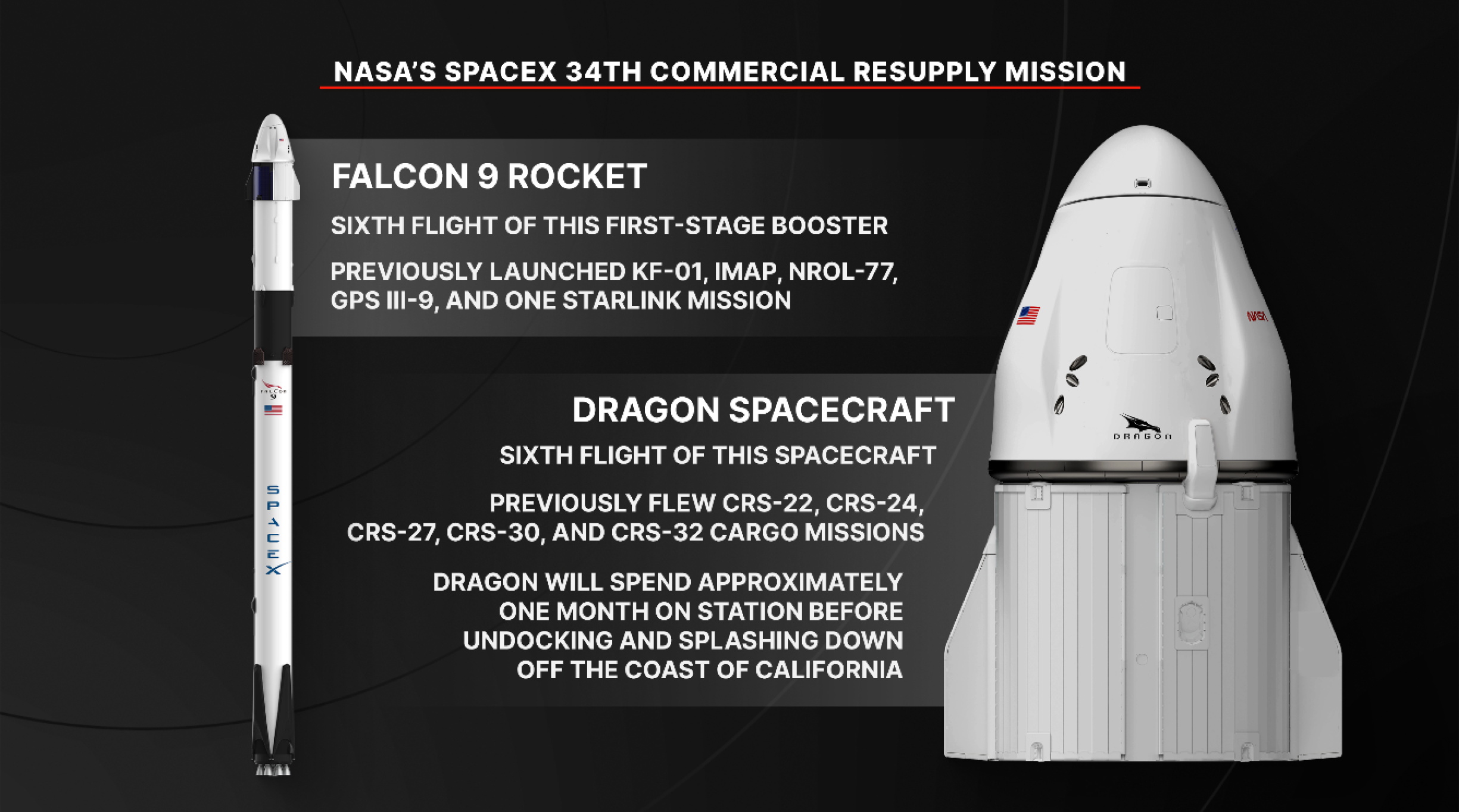
NASA’s SpaceX 34th Commercial Resupply Mission: A Complete Overview
The International Space Station (ISS) continues to rely on regular cargo deliveries to maintain operations and advance scientific research. NASA’s SpaceX 34th Commercial Resupply Mission (CRS-34) represents another successful chapter in the ongoing partnership between NASA and SpaceX, ensuring astronauts aboard the orbital laboratory have the supplies and equipment they need.
What Is the CRS-34 Mission?
CRS-34 was part of NASA’s Commercial Resupply Services (CRS) program, which contracts private companies to deliver cargo to the International Space Station. SpaceX has been a key partner in this program since 2012, using their reliable Falcon 9 rocket and Dragon spacecraft to transport vital supplies.
This particular mission focused on delivering essential provisions, cutting-edge scientific equipment, and technology demonstrations that support ongoing research aboard the ISS.
Key Mission Objectives
The CRS-34 mission served several critical purposes:
- Scientific Research Equipment: Delivering new experiments and research materials for studies in biology, physics, and materials science.
- Station Maintenance Supplies: Providing replacement parts and equipment needed for ongoing ISS operations.
- Crew Provisions: Transporting food, water, and other essential supplies for the astronaut crew.
- Technology Demonstrations: Carrying new technologies for testing in the space environment.
Cargo and Scientific Payloads
The Dragon spacecraft carried a diverse array of cargo designed to support both current research projects and new experiments. Scientific payloads included materials for studies examining how plants grow in microgravity, experiments investigating fluid physics, and equipment for atmospheric research.
Additionally, the mission delivered hardware for spacewalk preparations and station maintenance, ensuring the crew can continue their vital work maintaining and upgrading the orbital laboratory.
The Launch and Docking Process
The Falcon 9 rocket launched the Dragon cargo spacecraft from Cape Canaveral Space Force Station. After reaching orbit, the Dragon spacecraft used its autonomous docking system to approach and attach itself to the International Space Station.
The ISS crew monitored the approach and assisted with the docking procedure, ensuring a safe and successful attachment to the station’s Harmony module. Once docked, the astronauts began the process of unloading the cargo and transferring supplies.
Why Commercial Resupply Matters
NASA’s Commercial Resupply Services program has transformed how the agency maintains the International Space Station. By partnering with private companies like SpaceX, NASA can ensure regular cargo deliveries without relying solely on government-operated vehicles.
This approach has proven highly successful, with SpaceX completing dozens of missions to the ISS. The reliability of the Falcon 9 rocket and Dragon spacecraft has made them essential components of NASA’s space logistics strategy.
Looking Ahead
missions like CRS-34 demonstrate the ongoing importance of public-private partnerships in space exploration. As NASA works toward returning astronauts to the Moon through the Artemis program and eventually sending humans to Mars, reliable cargo resupply will remain crucial.
SpaceX continues to refine their Dragon spacecraft and launch systems, making each subsequent mission more efficient and reliable than the last. The success of CRS-34 adds to the growing legacy of commercial spaceflight and ensures the International Space Station remains fully operational for years to come.
Conclusion
NASA’s SpaceX 34th Commercial Resupply Mission represents another milestone in the successful partnership between NASA and SpaceX. By delivering essential supplies, scientific equipment, and research materials, CRS-34 helps ensure astronauts aboard the International Space Station can continue their vital work advancing our understanding of space and conducting groundbreaking research.
As commercial spaceflight continues to evolve, missions like CRS-34 pave the way for a future where regular, reliable access to space becomes the norm rather than the exception.

Comments are closed, but trackbacks and pingbacks are open.