

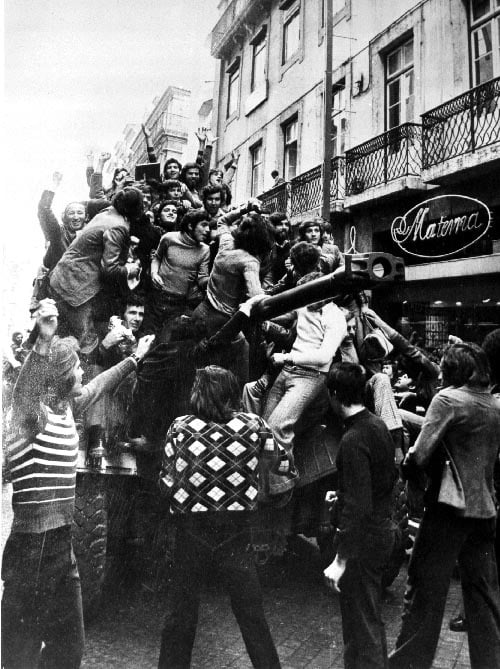
On April 25, 1974, a peaceful military coup transformed Portugal forever. Soldiers placed carnations in their rifle barrels, symbolizing hope over violence. This day, known as the Carnation Revolution, ended 48 years of fascist dictatorship and sparked one of the most significant democratic transitions in European history.
The revolution offers powerful lessons about resisting authoritarianism, challenging imperial ambitions, and building democratic futures. These lessons remain relevant today as nations worldwide struggle with rising extremism and democratic erosion.
Understanding Portugal’s Fascist Regime
Portugal under António de Oliveira Salazar established the Estado Novo (New State) in 1933. This authoritarian regime suppressed political opposition, banned trade unions, and maintained strict censorship. The secret police (PIDE) terrorized citizens who dared to question the government.
Salazar ruled with an iron fist for nearly four decades. His regime promoted a nationalist ideology rooted in Catholic traditionalism, anti-communism, and glorification of Portugal’s colonial empire. Independent media ceased to exist. Political parties were banned. Anyone suspected of leftist sympathies faced imprisonment, torture, or exile.
When Salazar suffered a stroke in 1968, Marcelo Caetano took over as prime minister. Despite minor cosmetic reforms, the regime’s repressive nature remained unchanged. The Portuguese people continued living under a system that denied basic freedoms and human rights.
The Colonial Burden That Fueled Resistance
Portugal’s refusal to decolonize its African territories became a critical factor in the regime’s eventual collapse. By the 1960s, liberation movements in Angola, Mozambique, and Guinea-Bissau launched armed struggles against Portuguese rule.
The colonial wars drained Portugal’s economy and consumed nearly half the national budget. Hundreds of thousands of young Portuguese men were conscripted to fight in Africa. Casualties mounted. Public discontent grew. The regime’s claim that colonialism was a noble mission increasingly fell flat against the reality of endless warfare.
These wars created conditions for resistance within the military itself. Many officers witnessed firsthand the futility of colonial warfare. Soldiers returned home with changed perspectives. The African liberation movements demonstrated that colonized peoples could successfully resist imperial powers.
The Revolutionary Movement Takes Shape
The Carnation Revolution did not emerge spontaneously. It resulted from careful organization among military officers who recognized the regime’s fragility. The Armed Revolutionary Movement (MFA) brought together captains, majors, and colonels who shared democratic convictions.
Captain Salgueiro Maia emerged as one of the revolution’s key figures. His measured approach and refusal to use violence became symbolic of the coup’s peaceful nature. The MFA carefully planned their operation, coordinating across military units to ensure success.
What made this movement unique was its commitment to democracy over personal power. Unlike many military coups in history, the MFA genuinely sought to return Portugal to civilian rule. They drafted plans for rapid democratization and scheduled elections within months of taking power.
The Day That Changed Everything: April 25, 1974
At 3:30 AM on April 25, 1974, military units began moving into position across Lisbon. Radio stations broadcast the revolutionary anthem "Grândola, Vila Morena," which had been banned by the regime. This signal confirmed the operation was underway.
Unlike previous military interventions in Portuguese history, the MFA prioritized minimizing violence. They targeted key government buildings and military installations. Most soldiers and police either joined the revolution or stood down without resistance.
As citizens flooded the streets, something remarkable happened. Soldiers offered carnations to civilians, who placed them in rifle barrels. The flowers became the revolution’s symbol, representing hope, peace, and renewal. Not a single person was killed during the initial coup.
Key Lessons from the Carnation Revolution
1. Authoritarian Regimes Can Fall Peacefully
The Carnation Revolution demonstrated that ending dictatorship does not require widespread violence. The MFA’s disciplined approach and popular support enabled a peaceful transition. This stands as a powerful example for movements worldwide seeking democratic change.
2. Military Dissent Is Crucial
No revolution succeeds without divisions within the ruling power structure. The MFA’s existence proved that not all military personnel supported the regime. Building bridges with reform-minded military figures can create openings for democratic change.
3. Imperial Ventures Weaken Tyranny
Portugal’s colonial wars ultimately contributed to the regime’s downfall. The financial burden, human costs, and moral contradictions of imperialism created internal tensions that the dictatorship could not resolve. This lesson applies to modern imperial adventures that drain resources and legitimacy from authoritarian states.
4. Popular Mobilization Matters
The Portuguese people’s long history of quiet resistance created conditions for change. Underground political movements, worker strikes, and cultural opposition kept democratic ideals alive during decades of repression. When the moment came, citizens were ready to support the revolution.
5. Democratic Transitions Require Vigilance
The revolution’s aftermath was complicated. Portugal experienced political instability, including a brief communist takeover attempt in November 1975. The transition to democracy required constant vigilance and compromise among democratic forces.
Legacy and Ongoing Relevance
Today, Portugal stands as a thriving democracy and member of the European Union. The Carnation Revolution’s anniversary remains a national holiday celebrated each April 25. The carnation symbolizes the nation’s commitment to freedom and democracy.
The revolution’s lessons resonate beyond Portugal. From Eastern Europe to Latin America, movements for democratic change have drawn inspiration from the Portuguese experience. The demonstration that peaceful transition is possible offers hope to those living under authoritarian rule.
The Carnation Revolution also reminds us that fascism and imperialism often go hand in hand. Portugal’s colonial wars were not separate from its fascist domestic policies—they were extensions of the same authoritarian mindset that viewed certain peoples as inferior and expendable.
Conclusion
The Carnation Revolution stands as one of history’s most successful democratic transitions. In a single day, Portugal ended nearly five decades of fascist rule. The peaceful nature of the coup, the restraint of military leaders, and the enthusiastic support of citizens created a model for democratic change.
The struggles against fascist-militarism and imperialism in Portugal were deeply interconnected. Ending domestic tyranny required confronting colonial adventures. This lesson remains vital: democratic movements must address both internal repression and external aggression.
As democracy faces new challenges worldwide, the Carnation Revolution offers valuable insights. Authoritarian regimes appear stable until they suddenly collapse. Military institutions contain potential reformers. Popular resistance, even when suppressed, keeps democratic ideals alive. And peaceful transition, while difficult, remains possible.
The carnations placed in rifle barrels on April 25, 1974, continue to bloom as symbols of hope. They remind us that ordinary people, working together with principled military leaders, can transform their nations and build more just futures.

Comments are closed, but trackbacks and pingbacks are open.