

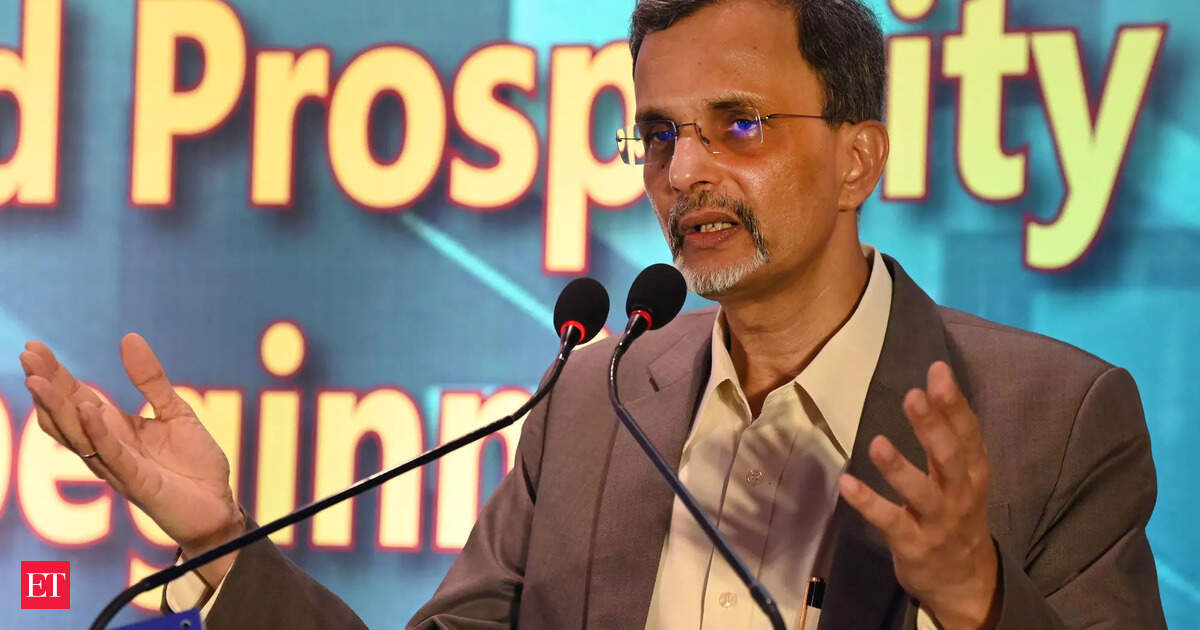
India’s economic ambitions have reached new heights, and the roadmap is clear—but challenging. Chief Economic Advisor (CEA) V Nageswaran has made a bold statement: India must sustain a 12% growth rate to achieve a $30 trillion economy by 2047. This target coincides with India’s 100th year of independence, making it a landmark goal for the nation.
But what does this target really mean? Is 12% growth achievable? And how will it impact the average Indian citizen? Let’s break down the numbers, the challenges, and the opportunities ahead.
Understanding India’s $30 Trillion Target
By 2047, India aims to transform from a developing nation into a fully developed economy. The $30 trillion mark isn’t just a number—it represents a massive leap from India’s current GDP of approximately $3.7 trillion (as of 2024).
To put this in perspective, consider these facts:
- India currently ranks as the world’s fifth-largest economy
- Reaching $30 trillion would likely make India the world’s second or third-largest economy
- This target requires nearly an 8-fold increase in economic size over 23 years
- The compound annual growth rate needed is approximately 12%
What 12% Growth Means for India
The Current Economic Landscape
India has been growing at a robust pace compared to global peers. In recent years, India has clocked growth rates between 6% to 9%, making it one of the fastest-growing major economies. However, sustaining 12% growth consistently over two decades is unprecedented.
For comparison, China’s rapid growth phase saw rates above 10% for several years, but maintaining that over 23 years would be extraordinary. India must now aim to outperform even the most successful growth stories in economic history.
Challenges to Achieving 12% Growth
The path to 12% isn’t without significant hurdles:
- Infrastructure Gaps: India needs massive investments in roads, railways, ports, and digital infrastructure
- Manufacturing Push: The share of manufacturing in GDP must rise substantially from current levels
- Skill Development: Millions of young Indians need quality education and vocational training
- Global Headwinds: Geopolitical tensions, climate change, and supply chain disruptions pose risks
- Financial Sector Health: Banks and financial institutions must remain robust to fund growth
Key Sectors Driving Growth
To achieve the $30 trillion target, multiple sectors must fire on all cylinders. Here are the critical growth drivers:
1. Manufacturing and Export
India’s "Make in India" initiative must evolve into a global manufacturing powerhouse. The government’s Production Linked Incentive (PLI) schemes are already attracting major investments in electronics, pharmaceuticals, and automobiles.
2. Technology and Innovation
India’s digital public infrastructure—UPI, Aadhaar, and DigiLocker—has already set global benchmarks. Scaling tech innovation across sectors like fintech, healthtech, and edtech will be crucial.
3. Renewable Energy
With ambitious targets for solar and wind energy, India can become a green energy leader while reducing import dependence on fossil fuels. This sector alone could contribute trillions to the economy.
4. Agriculture Modernization
Despite employing nearly 45% of the workforce, agriculture contributes only about 18% to GDP. Modernization, value addition, and supply chain efficiency can unlock massive economic potential.
5. Services Sector Expansion
India’s IT and services sector has been a growth engine for decades. Expanding into higher-value services—AI, machine learning, consulting, and global capability centers—will drive the next wave.
What This Means for Common Indians
A $30 trillion economy by 2047 isn’t just about national pride—it directly impacts quality of life. Here’s what citizens can expect:
- Income Growth: Per capita income could rise 6-8 times, significantly improving living standards
- Job Creation: Millions of new jobs across manufacturing, services, and emerging sectors
- Better Infrastructure: World-class roads, airports, hospitals, and educational institutions
- Social Development: Improved healthcare, education, and social security systems
- Global Standing: Enhanced geopolitical influence and diplomatic leverage
Global Context and Comparisons
How does India’s ambition compare globally? Let’s look at some benchmarks:
- The United States, currently at ~$27 trillion, may reach $40-45 trillion by 2047
- China aims to become a $30+ trillion economy well before 2047
- Japan and Germany, currently around $4-5 trillion, face demographic challenges
- India’s young demographic dividend gives it a unique advantage
The global economic center of gravity is shifting toward Asia. India’s growth is essential not just for itself but for global economic stability and growth.
Policy Prescriptions for Sustained Growth
CEA V Nageswaran’s projection comes with implicit policy recommendations:
- Continued Economic Reforms: Land, labor, and agricultural reforms remain critical
- Investment in Human Capital: Education and healthcare spending must increase as a percentage of GDP
- Ease of Doing Business: Reducing bureaucratic hurdles for entrepreneurs and investors
- Fiscal Discipline: Maintaining sustainable government debt levels while investing in growth
- Export Promotion: Integrating deeper into global supply chains
Conclusion: The Road Ahead
Chief Economic Advisor V Nageswaran’s assertion that India needs 12% growth to hit the $30 trillion mark by 2047 sets a clear, if challenging, ambition. While the target is formidable, it’s not impossible.
India has the demographic dividend, the technological foundation, and increasingly, the policy momentum to achieve this goal. The next two decades will determine whether India can join the league of developed nations or remain trapped in middle-income status.
The journey to $30 trillion is not just about economic numbers—it’s about transforming the lives of 1.4 billion Indians. With consistent policy focus, private sector dynamism, and citizen participation, the dream of a developed India by 2047 can become reality.
The question isn’t whether India should aim for this target, but whether it can muster the collective will to achieve it. The clock is ticking, and the time to accelerate is now.

Comments are closed, but trackbacks and pingbacks are open.