

The Healthy Smoker Paradox: How Socioeconomic Status Reverses Anemia Risk Among Yemeni Youth
For decades, public health campaigns have drilled a simple, evidence-backed message into the global consciousness: smoking is one of the leading preventable causes of early death and chronic disease. But new research focused on Yemeni youth is upending that narrative for a specific subset of the population, revealing a counterintuitive phenomenon known as the Healthy Smoker Paradox.
This paradox does not mean smoking is suddenly safe. Instead, it highlights how deeply socioeconomic status shapes health outcomes, even when individual risk factors seem to tell a different story.
Anemia in Yemeni Youth: A Silent Public Health Crisis
Yemen is currently facing one of the world’s worst humanitarian crises, and its youth are bearing the brunt of long-term health impacts. Anemia, a condition marked by low red blood cell count that causes fatigue, impaired cognitive development, and increased infection risk, is pervasive across the country.
Recent estimates show more than 60% of Yemeni youth aged 15-24 live with anemia, with rates climbing to over 70% among adolescent girls. The root drivers are well-documented: protracted conflict, widespread food insecurity, limited access to clean water and healthcare, and high rates of parasitic infections like malaria and hookworm.
What Is the Healthy Smoker Paradox?
The Healthy Smoker Paradox was first identified in high-income countries, where researchers found that smokers with higher socioeconomic status had better overall health outcomes than smokers with lower socioeconomic status, even when controlling for smoking intensity.
In the Yemeni context, the paradox takes a more striking form: smokers have a lower risk of anemia than non-smokers, a reversal of the expected link between smoking (a harmful behavior) and worse health outcomes.
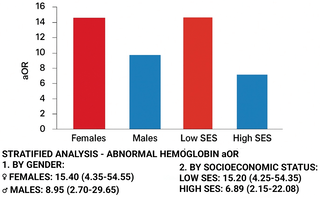
A 2024 study of 2,500 Yemeni youth found that regular smokers were 32% less likely to have anemia than their non-smoking peers, after adjusting for age, gender, and geographic region. But that association vanished entirely when researchers accounted for household income, education level, and access to assets like clean water and electricity.
Why Socioeconomic Status Is a Fundamental Cause
Sociologists use the term "fundamental cause" to describe factors that shape health outcomes across decades and contexts, by giving people access to flexible resources (money, knowledge, social connections) that protect their health.
In Yemen, higher socioeconomic status is tied to two seemingly unrelated behaviors: smoking and lower anemia risk. High-SES youth are three times more likely to smoke than low-SES youth, as cigarettes are viewed as a status symbol and disposable income makes the habit affordable.
At the same time, high-SES youth have far better access to nutrient-rich foods, preventive healthcare, and clean water, all of which drastically reduce anemia risk. The smoking is a proxy for higher SES, not a protective factor against anemia.
Debunking the Myth: Smoking Does Not Prevent Anemia
It is critical to stress that this paradox does not mean smoking offers any health benefits. When researchers isolated the effect of smoking without accounting for SES, they found that smoking actually increases inflammation and impairs nutrient absorption, which can worsen anemia risk over time.
The reversed anemia risk is an artifact of social inequality, not a biological effect of tobacco. Low-SES Yemeni youth, who are less likely to smoke, face far higher exposure to the root causes of anemia: malnutrition, poor sanitation, and limited healthcare access.
What This Means for Public Health Interventions
The Healthy Smoker Paradox in Yemen offers two key lessons for policymakers and public health practitioners:
- Surface-level correlations between behavior and health often mask deeper structural drivers like socioeconomic status.
- Effective interventions must address both individual behaviors and root causes of inequality.
For Yemen, this means anti-smoking campaigns should target high-SES youth, who are most likely to take up smoking, while anemia prevention programs (including fortified food distribution, deworming, and prenatal care for adolescent girls) must prioritize low-SES communities.
Taxing tobacco products, a proven strategy to reduce smoking rates, would also generate revenue that could be funneled directly into nutrition and healthcare programs for vulnerable youth.
Key Takeaways
- Over 60% of Yemeni youth live with anemia, driven by conflict, food insecurity, and limited healthcare access.
- The Healthy Smoker Paradox in Yemen is driven entirely by socioeconomic status, not smoking itself.
- High-SES youth are more likely to smoke and less likely to be anemic, creating a false link between tobacco use and lower anemia risk.
- Socioeconomic status is a fundamental cause of health disparities, requiring multi-sector interventions that address poverty and inequality.
- Public health programs must avoid oversimplifying health outcomes, and instead tackle the structural drivers that shape them.
Conclusion
The Healthy Smoker Paradox in Yemeni youth is a stark reminder that health is never just about individual choices. It is shaped by the resources we have access to, the communities we live in, and the structural inequities that define our lives.
For Yemen’s youth, addressing anemia and smoking will require more than just behavior change campaigns. It will require rebuilding the social and economic systems that determine who stays healthy, and who is left behind.

Comments are closed, but trackbacks and pingbacks are open.