
Courtside Chess: Inside the Lakers’ Defensive Plans to Slow Shai Gilgeous-Alexander — and Give Themselves a Puncher’s Chance

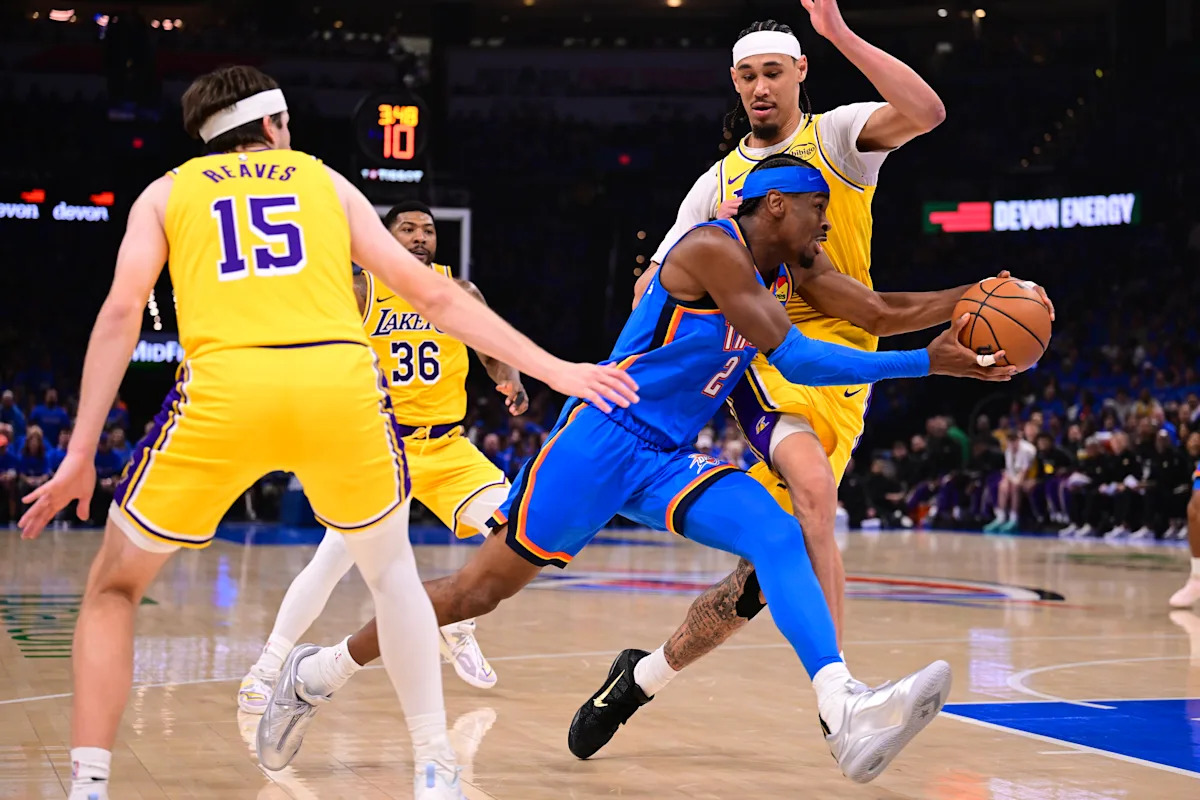
The NBA’s 2023-24 season has been defined by two breakout stories: the Oklahoma City Thunder’s shocking rise to Western Conference contention, and Shai Gilgeous-Alexander’s emergence as a top-3 MVP candidate. For the Los Angeles Lakers, who have hovered around the play-in race all season, slowing SGA down isn’t just a tactical preference — it’s a survival requirement.
Coaches and scouts close to the Lakers’ organization describe the team’s defensive prep for SGA as a “courtside chess match”: every move SGA makes, the Lakers have a counter programmed, adjusting pieces based on his tendencies. These tweaks aren’t flashy, but they’re designed to give a retooling Lakers roster a puncher’s chance against one of the league’s most dynamic scorers.
Why Slowing Shai Gilgeous-Alexander Is Non-Negotiable for the Lakers
SGA is averaging 31.4 points, 6.4 assists, and 1.7 steals per game this season, shooting 54% from the field and 41% from 3-point range. He attacks the rim at an elite rate, draws 8.2 free throws per game, and has perfected the midrange pull-up jumper that most modern stars have abandoned.
For the Lakers, who rank 18th in defensive rating league-wide, SGA represents a nightmare matchup. He punishes overaggressive defenders with foul draws, picks apart drop coverage with midrange jumpers, and finds open teammates when doubled. With OKC sitting 2nd in the West, any Lakers win against them could make or break their playoff hopes.
The Lakers’ Core Defensive Adjustments for SGA
Drop Coverage With a Perimeter Twist
Traditional drop coverage assigns a big man to protect the rim while guards fight over screens. The Lakers are using Anthony Davis as their primary drop defender, but with a critical adjustment: perimeter defenders are instructed to “show” hard on SGA’s screens, then recover to their man instead of fully committing to a double team.
This takes away SGA’s go-to midrange pull-up, while Davis’s 7-foot length deters drives to the rim. It’s a low-risk approach that avoids leaving OKC’s capable 3-point shooters (like Jalen Williams and Josh Giddey) wide open.
Fake Traps to Disrupt Rhythm
SGA is one of the league’s best passers out of double teams, so the Lakers avoid full blitzes. Instead, they run “fake traps”: a second defender will step toward SGA when he drives, then retreat to their assignment at the last second.
This forces SGA to hesitate for a split second — enough to throw off his timing, or lead to a forced, low-percentage shot. Scouts say this adjustment has cut SGA’s field goal percentage by 4% in their last two matchups.
Foul Avoidance Protocol
SGA draws 8.2 free throws per game by baiting defenders into reaching or lifting their arms on contests. The Lakers have implemented a strict “verticality first” rule for defenders guarding SGA: keep arms down, contest with body position, and never reach for the ball.
Lengthy defenders like Jarred Vanderbilt and Austin Reaves are key here: their 6-foot-8+ wingspans let them contest SGA’s shots without needing to jump or extend, cutting down on unnecessary fouls.
How These Adjustments Give the Lakers a Puncher’s Chance
The Lakers don’t need to hold SGA to 10 points to win — they just need to slow him enough to keep the game within single digits. When SGA is forced to work harder for each bucket, his pass volume drops, limiting OKC’s role players from getting easy looks.
More importantly, these stops let the Lakers run in transition, where LeBron James and Anthony Davis are still elite playmakers. A single stop against SGA can turn into 2 fast break points, which adds up over a 48-minute game.
Even when SGA scores 30+, the Lakers’ tweaks have kept OKC’s team scoring under 110 in 3 of their last 4 matchups — a mark that gives LA’s 12th-ranked offense a chance to keep pace.
Key Matchups to Watch When Lakers Face OKC
- Jarred Vanderbilt vs. Shai Gilgeous-Alexander: Vando will be the primary on-ball defender, using his lateral quickness and length to stay in front of SGA without fouling.
- Anthony Davis, help-side rim protector: AD will patrol the paint, ready to contest SGA’s drives if perimeter defenders get beat.
- Austin Reaves, secondary defender: Reaves’ physical, gritty style gives SGA a different look when he gets past Vando, using body contact to disrupt his rhythm.
- LeBron James, help defender: LeBron’s elite court vision lets him anticipate SGA’s passes, jumping lanes to create turnovers without overcommitting.
Conclusion
Slowing Shai Gilgeous-Alexander is never going to be easy — he’s a top-5 player in the world for a reason. But the Lakers’ chess-match adjustments have turned a lopsided matchup into a competitive one, giving a team fighting for playoff positioning a real puncher’s chance.
These tweaks aren’t revolutionary, but they’re smart, tailored to SGA’s specific tendencies, and executed by a roster with enough length and IQ to pull them off. When the Lakers and Thunder face off again this season, watch how these small adjustments shift the game’s momentum — it’s courtside chess at its finest.

Comments are closed, but trackbacks and pingbacks are open.