

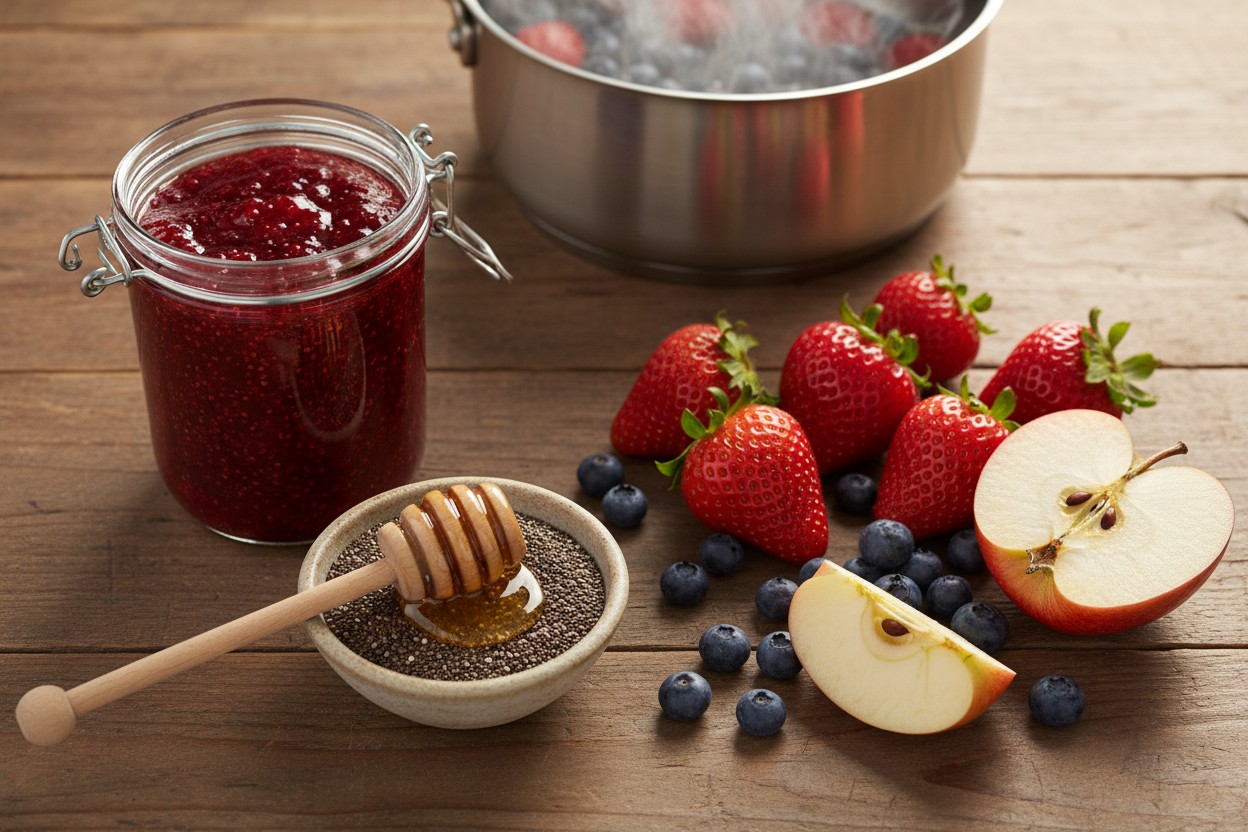
There’s something deeply satisfying about spreading a spoonful of vibrant, fruit-packed jam on your morning toast. But what if that jam came from your own kitchen? More people are discovering the remarkable benefits of homemade jams, and nutrition experts are taking notice.
Why Homemade Jams Trump Store-Bought Varieties
When you make jam at home, you become the master of every ingredient that goes into your jar. Commercial jam manufacturers often prioritize shelf life, cost, and taste consistency over nutritional value. This means loading products with refined sugars, artificial preservatives, and mysterious additives you can’t pronounce.
Homemade jam puts you in complete control. You choose the fruit, the sweetener, and exactly what goes into your creation. This level of control is something nutritionists increasingly recommend for health-conscious consumers.
Total Sugar Control
One of the biggest advantages of making jam at home is the ability to manage sugar content. Store-bought jams often contain excessive amounts of added sugars—sometimes up to 50% of the product by weight. This far exceeds what most people need or want in their diet.
When you make jam yourself, you can:
- Reduce sugar quantities – Many jam recipes work perfectly well with half the sugar traditional formulas call for
- Choose healthier sweeteners – Honey, maple syrup, or coconut sugar offer alternatives to refined white sugar
- Use ripe, naturally sweet fruit – Fully ripened fruit requires less added sweetener
- Experiment with no-sugar recipes – Pectin-based recipes can create set jams with minimal or no added sugars
Nutrition experts note that reducing added sugar intake is one of the most impactful changes people can make for their health. Homemade jam makes this achievable without sacrificing the joy of this delicious spread.
Say Goodbye to Additives
Commercial jam shelves are filled with products containing a long list of ingredients that have nothing to do with fruit. Common additives found in store-bought jams include:
- High-fructose corn syrup
- Artificial preservatives (sodium benzoate, potassium sorbate)
- Synthetic food dyes
- Artificial flavorings
- Thickeners and texturizers
When you make jam at home, your ingredient list reads simply: fruit, sugar or sweetener, and perhaps some pectin or lemon juice. That’s it. No chemical names, no mysterious compounds—just real food.
Fresh Fruit, Maximum Nutrition
Homemade jam allows you to use peak-season fruit at its nutritional prime. Fresh berries, stone fruits, and apples are packed with vitamins, antioxidants, and fiber. Commercial processing often degrades these valuable nutrients through high-heat cooking and prolonged storage.
When you make small batches of jam with fresh fruit, you’re preserving not just the delicious flavor but also many of the health benefits that make fruit so valuable to your diet.
Getting Started with Homemade Jam
Making jam at home is simpler than you might think. Here’s what you need to know to begin:
Essential Equipment
- Large, heavy-bottomed pot
- Glass jars with lids (canning jars work perfectly)
- Wooden spoon
- Funnel (optional but helpful)
Basic Jam-Making Tips
- Use ripe fruit – The best flavor and natural sweetness come from fruit at its peak
- Start with less sugar – You can always add more, but you can’t remove it
- Test for set – Place a small plate in the freezer; when jam coats it and wrinkles when pushed, it’s ready
- Process properly – Water bath canning ensures your jam stays safe for months
The Bottom Line
Homemade jams represent a simple way to take control of what you eat. By making your own jam, you eliminate unnecessary sugars and additives while enjoying fruit at its most delicious. Whether you’re a seasoned canner or a complete beginner, the journey to homemade jam is one worth taking.
Your toast—and your body—will thank you for making the switch.

Comments are closed, but trackbacks and pingbacks are open.