

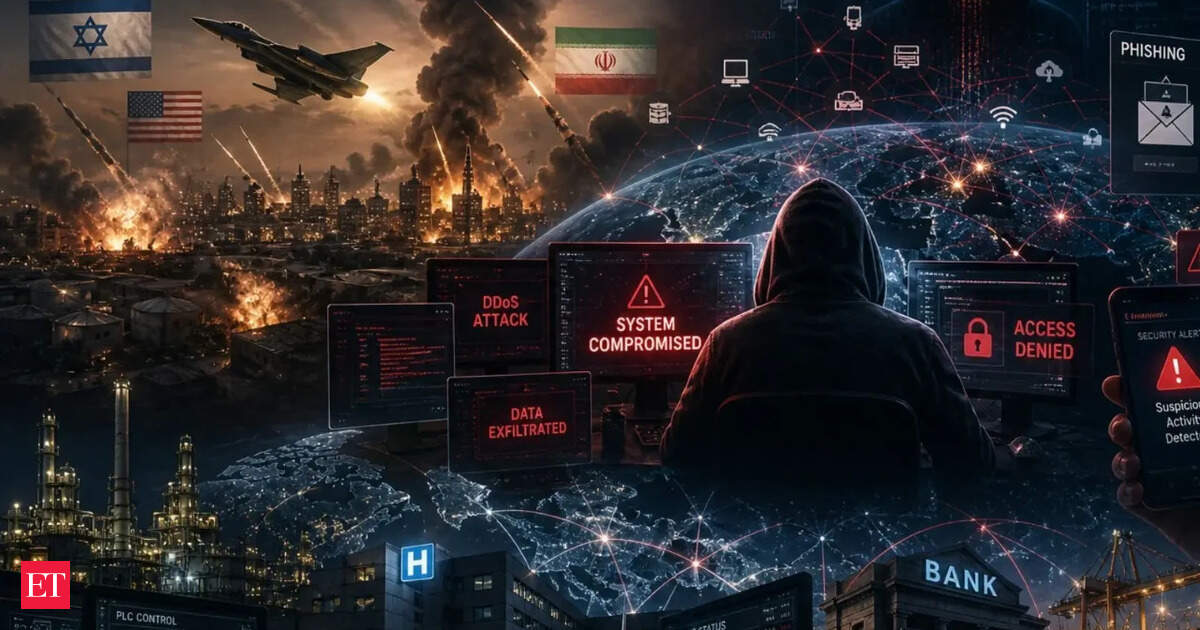
War Without Borders: The Rise of Cyberattacks Beyond the Battlefield
Gone are the days when war was confined to muddy trenches, fighter jets, and defined frontlines. Today, the deadliest battles are fought in silence, on networks that span the globe, targeting everything from power grids to hospital systems. This is war without borders – and cyberattacks are its primary weapon.
For decades, military strategists focused on kinetic warfare: tanks, missiles, and troops on the ground. But the digital revolution has upended that model. Cyberattacks now let state and non-state actors strike targets thousands of miles away, with no warning, no uniform, and no clear border to defend.
What Is "War Without Borders"?
The term describes conflict that ignores geographic boundaries, national sovereignty, and traditional rules of engagement. Unlike a ground war, where you can see enemy troops crossing a border, cyber warfare happens in a borderless digital space. An attacker in one country can disable a hospital in another in seconds, with no physical movement required.
These attacks are launched by a mix of actors: state-sponsored hacking groups, criminal syndicates, hacktivists, and even lone wolf operators. All leverage the global internet to hit targets far beyond their home turf.
How Cyberattacks Are Redefining Modern Warfare
Cyberattacks no longer just support traditional military operations – they are the operation. Below are the three most common ways they are reshaping conflict:
1. Targeting Civilian Infrastructure
Traditional war laws prohibit deliberate attacks on civilians, but cyber warfare frequently blurs this line. Critical infrastructure – power grids, water systems, hospitals, and transportation networks – is now a prime target.
Examples abound: the 2021 Colonial Pipeline hack shut down fuel supplies across the U.S. East Coast. In 2022, Russian-linked groups knocked out power for millions of Ukrainians weeks before ground invasions. Even pediatric hospitals in Europe have been hit by ransomware attacks traced to state-aligned actors.
2. Espionage and Data Theft
Cyberattacks let states steal classified military data, intellectual property, and sensitive citizen information at scale. The 2020 SolarWinds hack compromised 9 U.S. federal agencies and hundreds of private companies, with attackers linked to Russian intelligence.
Election interference is another common tactic: state actors use cyber tools to access voter databases, spread disinformation, and undermine public trust in democratic processes, as seen in the 2016 U.S. presidential election and 2020 EU parliamentary elections.
3. Disinformation Campaigns
Cyber tools are often paired with coordinated disinformation to destabilize rivals. Attackers hack social media accounts, create fake news sites, and amplify divisive content to sow confusion and erode public trust.
During the ongoing war in Ukraine, Russian-linked groups have used cyberattacks to take down Ukrainian news sites, then spread false narratives about battlefield losses via compromised platforms. Similar tactics have been used in conflicts across the Middle East and Asia.
Key Drivers Behind the Rise of Borderless Cyber Warfare
Several factors have accelerated the growth of cyberattacks as a primary weapon of war:
- Low barrier to entry: Ransomware-as-a-service, cheap hacking tools, and leaked malware code make it easy for even low-skilled actors to launch devastating attacks.
- Anonymity and attribution challenges: Attackers use VPNs, proxy servers, and compromised third-party networks to hide their tracks, making it hard for victims to retaliate.
- Explosive growth of connected devices: The IoT (Internet of Things) has added billions of vulnerable devices to global networks, from smart thermostats to industrial control systems, expanding the attack surface exponentially.
- Lack of international norms: Unlike nuclear or chemical weapons, there is no global treaty banning offensive cyberattacks or defining proportional retaliation, leaving a legal gray area for aggressors.
Real-World Impacts of Borderless Cyberattacks
The consequences of these attacks are far-reaching, affecting everyone from everyday citizens to national governments:
- Economic damage: The Colonial Pipeline hack cost the company $5 million in ransom, plus an estimated $200 million in supply chain disruptions. Global cybercrime damage is projected to hit $10.5 trillion annually by 2025.
- Loss of life: Ransomware attacks on hospitals have delayed critical surgeries, diverted ambulances, and led to preventable deaths in the U.S., Germany, and France.
- Erosion of trust: Repeated election interference and data breaches have made citizens less trusting of governments, media, and public institutions.
How to Protect Against Borderless Cyber Warfare
Mitigating these risks requires action at both national and individual levels:
For Nations
- Invest heavily in civilian and military cyber defense teams, and modernize critical infrastructure security.
- Establish international agreements banning attacks on civilian infrastructure, similar to the Geneva Conventions.
- Improve cross-border intelligence sharing to speed up attack attribution and response.
For Individuals
- Use strong, unique passwords for all accounts, and enable two-factor authentication (2FA) wherever possible.
- Keep all software, devices, and routers updated with the latest security patches.
- Be wary of unsolicited emails, texts, or links – phishing remains the top entry point for most cyberattacks.
Conclusion
War without borders is no longer a futuristic concept – it is here, and cyberattacks are its defining feature. As global connectivity grows, so too will the scale and frequency of these attacks.
The next major conflict may not start with a missile strike, but with a single malicious keystroke. Preparing for this new era of warfare requires collective action, clear international rules, and a commitment to protecting the digital infrastructure we all rely on.

Comments are closed, but trackbacks and pingbacks are open.