

Educational institutions are constantly evolving, and the way schools are led has a profound impact on teacher performance, morale, and overall job satisfaction. Traditional top-down leadership models are gradually making way for more collaborative approaches that empower teachers and foster shared decision-making. This shift toward distributed leadership has emerged as a powerful strategy for enhancing teacher job satisfaction and improving school outcomes.
What Is Distributed Leadership in Education?
Distributed leadership in schools refers to a leadership model where decision-making responsibilities are shared across multiple individuals rather than being concentrated in a single principal or school administrator. This approach recognizes that expertise exists throughout the school community and that teachers possess valuable insights that can inform educational policies and practices.
Unlike traditional hierarchical leadership, distributed leadership emphasizes:
- Shared decision-making among teachers, administrators, and staff
- Collaborative problem-solving approaches
- Teacher empowerment and autonomy in the classroom
- Collective responsibility for student success
- Open communication channels across all levels of
This leadership model transforms the school environment from a top-down structure into a more inclusive ecosystem where every voice matters.
The Direct Effects of Distributed Leadership on Teacher Job Satisfaction
Research consistently shows that distributed leadership has significant positive effects on teacher job satisfaction. When teachers are given opportunities to participate in decision-making processes, they experience greater professional fulfillment and commitment to their work.
Increased Professional Autonomy
One of the most significant impacts of distributed leadership is the increased sense of autonomy teachers experience. When educators have the freedom to make decisions about curriculum, teaching methods, and classroom management, they feel more respected and valued as professionals. This autonomy directly correlates with higher job satisfaction levels.
Enhanced Sense of Belonging
Distributed leadership creates a sense of ownership among teachers. When educators are included in school-wide decisions, they develop a stronger emotional connection to their institution. This belongingness reduces feelings of isolation and increases overall job satisfaction.
Greater Professional Growth Opportunities
This leadership model opens doors for professional development through leadership roles, committee participation, and mentorship opportunities. Teachers who engage in these activities report higher job satisfaction due to continuous learning and career advancement possibilities.
Improved Work Conditions
When teachers have input in shaping school policies, they often experience better working conditions. Collaborative decision-making leads to more realistic expectations, manageable workloads, and supportive work environments—all factors that contribute to enhanced job satisfaction.
The Mediating Role of Teacher Collaboration
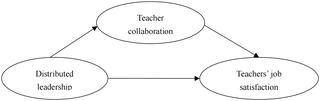
While distributed leadership directly impacts teacher job satisfaction, research reveals that teacher collaboration plays a crucial mediating role in this relationship. This means that collaboration acts as a bridge that amplifies the positive effects of distributed leadership on job satisfaction.
How Teacher Collaboration Enhances the Leadership-Satisfaction Link
Teacher collaboration refers to the extent to which educators work together to plan instruction, share best practices, solve problems, and support one another professionally. When distributed leadership is implemented effectively, it naturally fosters stronger collaboration among teachers, which in turn boosts job satisfaction.
The mediation works through several key mechanisms:
- Shared Problem-Solving: Distributed leadership encourages teachers to work together on challenges. This collaborative problem-solving reduces stress and increases job satisfaction.
- Knowledge Sharing: When teachers collaborate, they share expertise and learn from one another. This professional exchange enhances confidence and satisfaction.
- Emotional Support: Collaborative environments provide emotional support systems among colleagues, buffering against burnout and increasing satisfaction.
- Collective Efficacy: Working together toward common goals builds a sense of collective efficacy, which positively impacts job satisfaction.
- Trust Building: Collaboration fosters trust among teachers and between teachers and administrators, creating a more positive work environment.
Research Findings on the Mediation Effect
Studies in educational leadership have demonstrated that the relationship between distributed leadership and teacher job satisfaction is significantly stronger when teacher collaboration is present. In fact, research suggests that teacher collaboration can explain up to 40% of the variance in how distributed leadership affects job satisfaction.
This finding underscores the importance of not just implementing distributed leadership but also actively cultivating collaborative cultures within schools. Without meaningful collaboration, the full benefits of distributed leadership may not be realized.
Practical Strategies for Schools
Educational institutions looking to enhance teacher job satisfaction through distributed leadership should consider these evidence-based strategies:
Create Collaborative Planning Time
Schedule regular opportunities for teachers to meet, plan together, and discuss instructional strategies. This dedicated time builds collaboration and reinforces the distributed leadership approach.
Establish Leadership Teams
Form teacher-led committees and leadership teams that address curriculum, student welfare, and school improvement initiatives. These structures provide authentic opportunities for shared decision-making.
Implement Peer Mentorship Programs
Pair experienced teachers with newer educators to foster collaboration, knowledge transfer, and professional support networks.
Use Collaborative Technology Tools
Invest in digital platforms that facilitate collaboration, resource sharing, and communication among teachers.
Recognize and Celebrate Collaborative Efforts
Acknowledge teachers who actively contribute to collaborative initiatives and demonstrate distributed leadership behaviors.
Challenges and Considerations
While distributed leadership offers significant benefits for teacher job satisfaction, schools must navigate potential challenges:
- Time Constraints: Implementing collaborative structures requires protected time, which can be difficult to schedule.
- Varying Teacher Preferences: Not all teachers desire leadership responsibilities; options should remain voluntary.
- Power Dynamics: Genuine distribution of power requires careful attention to avoid tokenism.
- Training Needs: Teachers may need professional development to effectively assume leadership roles.
Addressing these challenges thoughtfully ensures that distributed leadership initiatives produce lasting positive effects on teacher job satisfaction.
Conclusion
The evidence is clear: distributed leadership has a significant positive effect on teacher job satisfaction, and teacher collaboration serves as a critical mediating factor that amplifies these benefits. Schools that embrace shared decision-making while fostering collaborative cultures create environments where teachers feel valued, supported, and professionally fulfilled.
For educational administrators and policy makers, the implication is straightforward: investing in distributed leadership structures and collaborative practices is an investment in teacher satisfaction—and ultimately, in student success. When teachers thrive professionally, students benefit, and the entire school community flourishes.
The future of educational leadership lies in recognizing that great leadership isn’t about one person at the top—it’s about distributing expertise, empowering teachers, and building collaborative cultures where everyone contributes to the school’s mission.

Comments are closed, but trackbacks and pingbacks are open.