

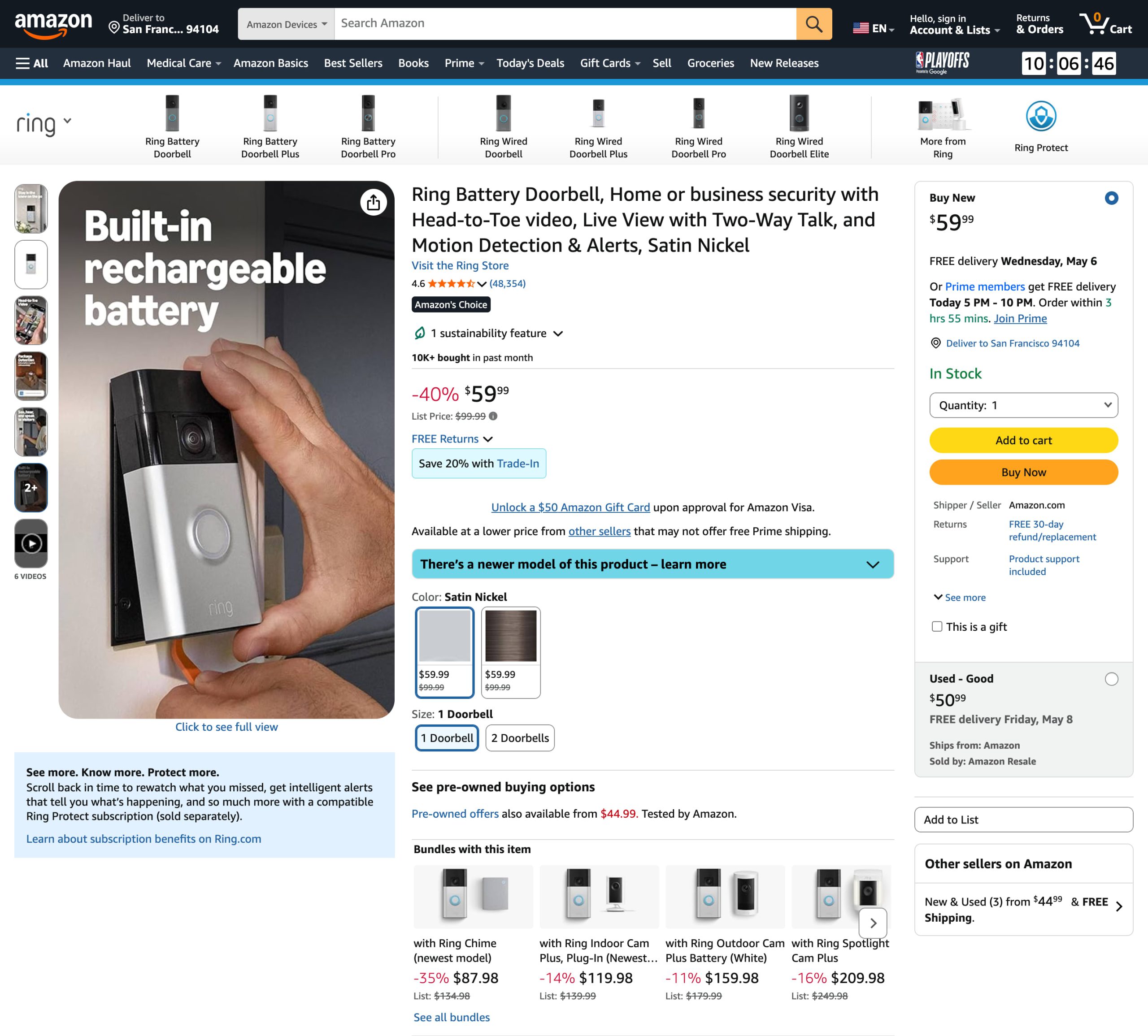
Every element on an Amazon product page has been tested thousands of times. From the headline to the bullet points, every word earns its place through relentless A/B testing and data-driven optimization. As a marketer or e-commerce business owner, you can leverage these proven techniques to transform your own product pages into conversion machines.
In this edition of Copywriting Friday, we’re breaking down five battle-tested strategies that Amazon uses to turn browsers into buyers. These aren’t theoretical concepts—they’re techniques backed by millions of dollars in testing.
1. Lead with Benefits, Not Features
Amazon’s most successful product listings understand one fundamental truth: customers don’t buy products—they buy the outcomes those products deliver. While specifications matter, they’re secondary to the transformation the customer will experience.
Instead of listing what your product does, focus on what it does for the customer. Compare these two approaches:
- Feature-focused: "This blender has a 1000-watt motor and stainless steel blades"
- Benefit-focused: "Make silky-smooth smoothies in seconds with powerful blades that crush ice effortlessly"
The benefit-driven copy creates a mental picture of the desired outcome. Your customers are already imagining themselves using the product—your job is to make that vision as vivid as possible.
2. Use Specific, Concrete Numbers
Vague claims get ignored. Specific numbers build credibility and trust. Amazon’s top-performing listings are filled with precise figures rather than subjective superlatives.
Notice how Amazon sellers phrase things differently:
- Weak: "Fast charging"
- Strong: "50% charge in just 20 minutes"
- Weak: "Lots of storage"
- Strong: "Holds up to 500GB of photos, videos, and files"
Specific numbers work because they’re verifiable. When a customer can fact-check your claims, trust is established. This confidence directly translates into higher conversion rates.
3. Structure Bullet Points for Scanners
Most visitors don’t read—they scan. Amazon’s bullet point format acknowledges this behavior by presenting information in bite-sized, easily digestible chunks.
Effective bullet points follow a clear pattern:
- Start with the most important benefit: Put your strongest selling point first
- Keep each bullet to one idea: Don’t cram multiple points into a single line
- Use parallel structure: Start each bullet with a consistent word form (verb or noun)
- Limit to 5-7 bullets: More creates decision fatigue
The first bullet point is prime real estate—use it for your most compelling differentiator. This is what catches attention and determines whether the customer continues reading.
4. Address Objections Before They Arise
Amazon’s best product pages anticipate customer concerns and address them proactively. This technique removes friction from the buying decision.
Common objections to preemptively address include:
- Quality concerns: "Made from premium materials designed to last years"
- Compatibility issues: "Works with all standard USB-C devices"
- Setup difficulty: "No tools required—set up in under 5 minutes"
- Warranty questions: "Backed by our 2-year satisfaction guarantee"
By acknowledging potential concerns, you demonstrate empathy and build confidence. Customers feel assured that they’ve thought through the purchase thoroughly.
5. Create Social Proof Through Specific Use Cases
Beyond reviews, Amazon’s top listings paint pictures of real-life scenarios where the product shines. These use case descriptions serve as social proof and help customers envision the product in their own lives.
Instead of generic statements, be specific about who the product is for:
- "Perfect for busy professionals who need quick, nutritious meals"
- "Ideal for travelers who want to capture every moment"
- "Great for parents creating a safe play environment"
This technique creates an identity match. When readers see themselves in your description, the product becomes relevant to their specific needs. The more precisely you can describe your ideal customer, the stronger the connection.
Putting It All Together
These five techniques share a common thread: they all prioritize the customer’s perspective over product-centric information. Amazon’s relentless testing has proven that customer-focused copy converts better.
Start implementing these strategies one at a time. Begin with benefit-driven headlines, then layer in specific numbers, optimized bullet points, objection handling, and targeted use cases. Track your conversion rates and watch the improvements roll in.
The beauty of these techniques is their universal applicability. Whether you’re selling on Amazon, your own e-commerce store, or through digital marketing campaigns, these copywriting principles will elevate your results.
Ready to transform your product pages? Start auditing your current copy against these five criteria today. Your conversion rates will thank you.

Comments are closed, but trackbacks and pingbacks are open.