
China’s Self‑Driving Truck Leaders Say AI Breakthroughs Won’t Accelerate Rollout — Here’s Why

Introduction
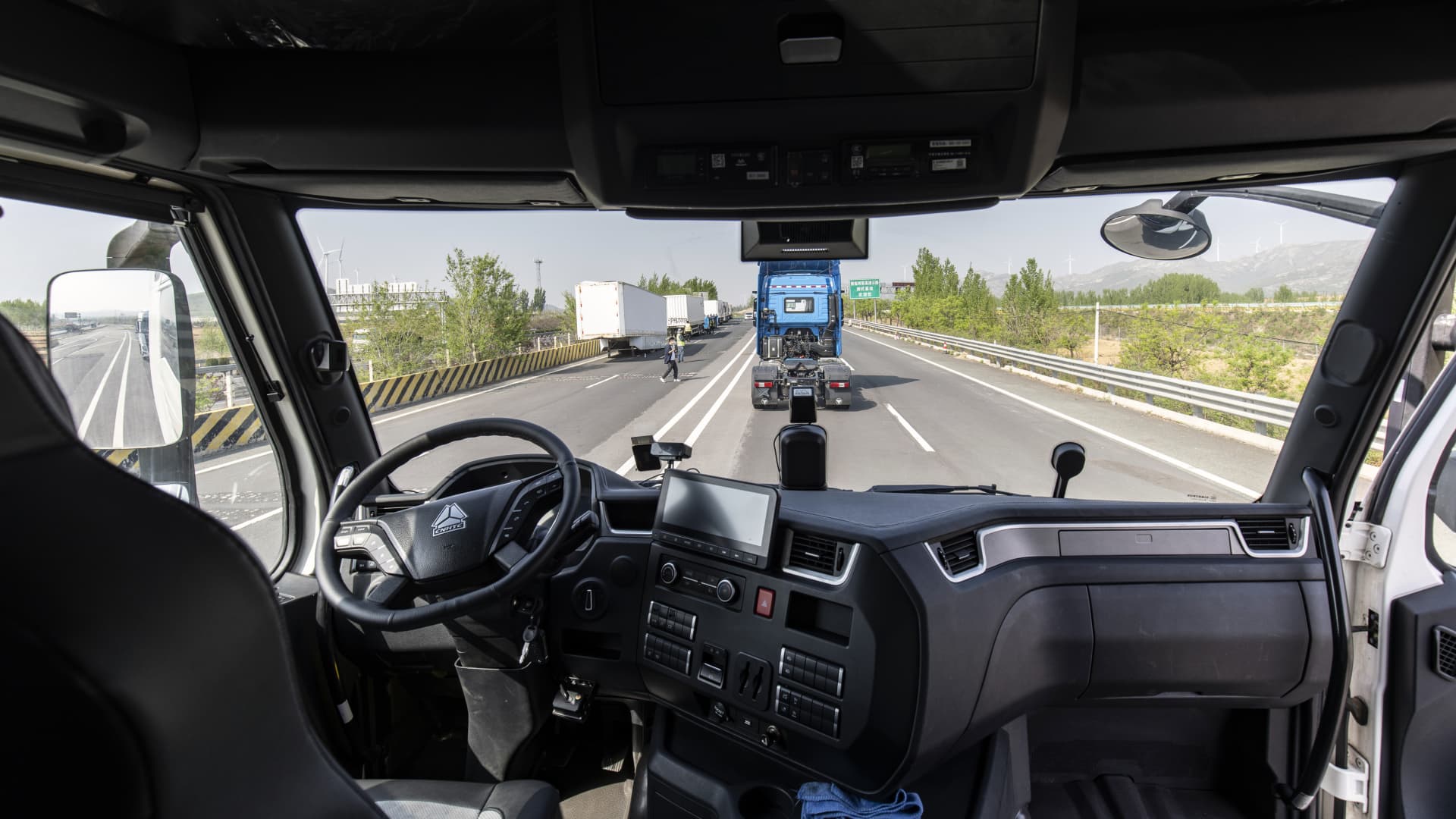
China is home to the world’s most aggressive autonomous‑vehicle programs, and its self‑driving trucks have drawn massive investment. Yet the industry’s leaders warn that recent AI breakthroughs won’t magically speed up commercial deployment. Understanding the real bottlenecks helps stakeholders set realistic expectations and plan smarter strategies.
Why AI Advances Alone Aren’t Enough
1. Regulatory Landscape Remains Cautious
- Safety certification: The Ministry of Transport requires extensive real‑world testing before granting permits for public road use.
- Data privacy laws: China’s Personal Information Protection Law (PIPL) limits how fleet operators can share sensor data for AI training.
- Local standards: Each province may impose its own speed and weight limits for autonomous trucks, creating a patchwork of rules.
2. Infrastructure Gaps
Even with better perception models, trucks need supportive road infrastructure:
- Dedicated lanes for heavy autonomous vehicles are still rare outside a few pilot zones.
- High‑definition maps must be updated weekly to reflect construction, weather‑related road changes, and seasonal traffic patterns.
- Reliable 5G coverage, crucial for low‑latency cloud‑edge computing, is uneven across inland logistics corridors.
3. Hardware Constraints
State‑of‑the‑art AI models demand more processing power, but:
- Truck cabins have limited space for cooling high‑performance GPUs or ASICs.
- Power consumption directly impacts fuel efficiency, a key cost metric for logistics firms.
- Robustness against vibration, dust, and temperature swings remains a major engineering challenge.
Key Challenges That Actually Slow Rollout
Safety Validation at Scale
Companies must demonstrate millions of safe miles before insurers will lower premiums. This requires coordinated testing across diverse geographic regions, which is time‑consuming and expensive.
Talent Shortage
While China produces many AI graduates, few have the niche expertise to integrate perception algorithms with heavy‑vehicle dynamics, control theory, and logistics software.
Economic Viability
Owners calculate total cost of ownership (TCO). If the upfront cost of L4/L5 hardware plus maintenance exceeds savings from reduced driver wages, adoption stalls.
What Companies Are Doing Now
- Phased deployments: Starting with Level‑2 driver assistance on highways, then expanding to Level‑3 in controlled industrial parks.
- Data‑centric partnerships: Joint ventures with telecom firms to secure 5G edge nodes along major freight routes.
- Regulatory sandboxes: Working with local governments to create test corridors where rules are temporarily relaxed for research.
Practical Takeaways for Stakeholders
- Invest in mapping and connectivity: High‑resolution maps and reliable V2X communication often deliver ROI faster than pure AI upgrades.
- Focus on modular hardware: Choose platforms that allow incremental upgrades as AI models become more efficient.
- Engage regulators early: Co‑design safety protocols to shorten certification timelines.
- Train cross‑functional teams: Blend AI talent with automotive engineering and logistics expertise.
Conclusion
AI breakthroughs are exciting, but they are only one piece of the autonomous‑truck puzzle in China. Regulatory approval, infrastructure readiness, hardware practicality, and economics dominate the timeline. Companies that address these systemic issues alongside AI development will be the ones to finally see self‑driving trucks dominate the nation’s logistics network.

Comments are closed, but trackbacks and pingbacks are open.