

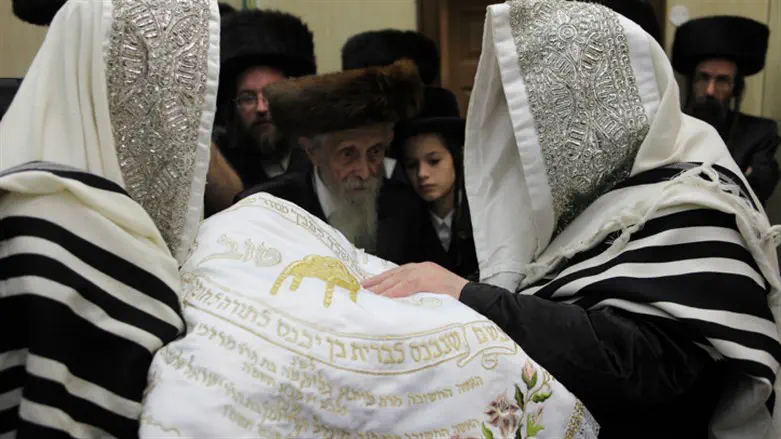
For millennia, circumcision has been a non-negotiable pillar of Jewish identity, performed on the eighth day of a male infant’s life per biblical command. But in Belgium, this sacred practice is under unprecedented attack — and Jewish leaders say the government’s crusade against circumcision is nothing less than a war on the Jewish people themselves.
What’s Driving Belgium’s Circumcision Crackdown?
Over the past three years, Belgian lawmakers have introduced a flurry of bills aimed at restricting or outright banning non-medical circumcision for minors. Framed as child protection measures, these proposals claim the practice violates a child’s bodily autonomy and right to choose their own religious identity later in life.
The push began in the Flemish region in 2022, with local legislators proposing fines of up to €50,000 for anyone performing non-medical circumcision on a minor. Federal-level debates followed in 2023, with some lawmakers calling for a nationwide ban that would include no exceptions for religious practice.
The Irreplaceable Role of Circumcision in Judaism
Known as brit milah in Hebrew, circumcision is one of the most fundamental mitzvot (commandments) in Jewish law. It marks the covenant between God and the Jewish people, a tradition dating back to the biblical figure Abraham. For observant Jews, this is not an optional cultural practice — it is a core requirement of the faith.
A Jewish boy who is not circumcised is considered to have an incomplete religious identity, barred from participating in key communal rites like reading from the Torah at his bar mitzvah. The ritual is performed by a trained mohel, a specialist who follows strict hygiene and safety protocols refined over centuries.
Why Jewish Leaders Call This a Targeted War on Jews
While proponents of the ban claim it applies equally to all non-medical circumcision, Jewish leaders argue the measures are disproportionately harmful to their community. Belgium is home to roughly 30,000 Jews, one of the smallest Jewish populations in Western Europe — and the ban would make it impossible for observant Jews to remain in the country while following their faith.
- Unlike some other groups, Jewish circumcision is not a cultural tradition that can be skipped or delayed: it must be performed on the eighth day of life, unless there are medical contraindications.
- There is no record of Jewish parents in Belgium seeking to reverse a circumcision, undercutting claims that the practice causes long-term harm to children.
- Proposed bills often carve out exceptions for medically necessary procedures, but explicitly exclude religious exemptions — a deliberate choice that singles out faith-based practices.
“This is not about child protection. It is about making Jewish life in Belgium impossible,” said one spokesperson for the Central Israeli Consistory of Belgium. “If you ban brit milah, you are telling Jews they do not belong here.”
The False Divide Between Child Rights and Religious Freedom
Lawmakers pushing the ban rely on a false dichotomy between children’s rights and religious freedom. Across Europe, parents make religious decisions for their minor children every day: from enrolling them in faith-based schools to performing infant baptisms or dedications. Singling out circumcision ignores this broader context of parental religious autonomy.
Legal experts also note that the European Court of Human Rights has repeatedly ruled that religious circumcision is protected under Article 9 of the European Convention on Human Rights, which guarantees freedom of religion. Belgium’s proposed bans would likely be struck down as illegal if passed — but the psychological harm to the Jewish community has already been done.
How Belgium’s Jewish Community Is Fighting Back
Jewish organizations across Belgium have mobilized to block the proposed bans. The European Jewish Congress, the Central Israeli Consistory, and local advocacy groups have launched petitions, held meetings with lawmakers, and organized public protests in Brussels and Antwerp, home to most of Belgium’s Jewish population.
Some families have already begun making contingency plans to relocate to neighboring countries like France or the Netherlands, where religious circumcision remains fully legal. This “Jewish flight” would further shrink Belgium’s already tiny Jewish community, erasing decades of cultural contribution to Belgian society.
Conclusion
Belgium’s war on circumcision is not a neutral policy debate. It is a targeted attack on the Jewish community, designed to erase a core pillar of Jewish identity under the guise of child protection. If the government succeeds in banning brit milah, it will send a clear message to Jews across Europe: your religious freedom is secondary to political whims.
For Belgium’s Jews, this fight is about more than a single ritual. It is about whether they can exist as a visible, thriving community in a country that claims to uphold liberal values. The world is watching — and the Jewish community will not back down from defending their right to practice their faith freely.

Comments are closed, but trackbacks and pingbacks are open.