

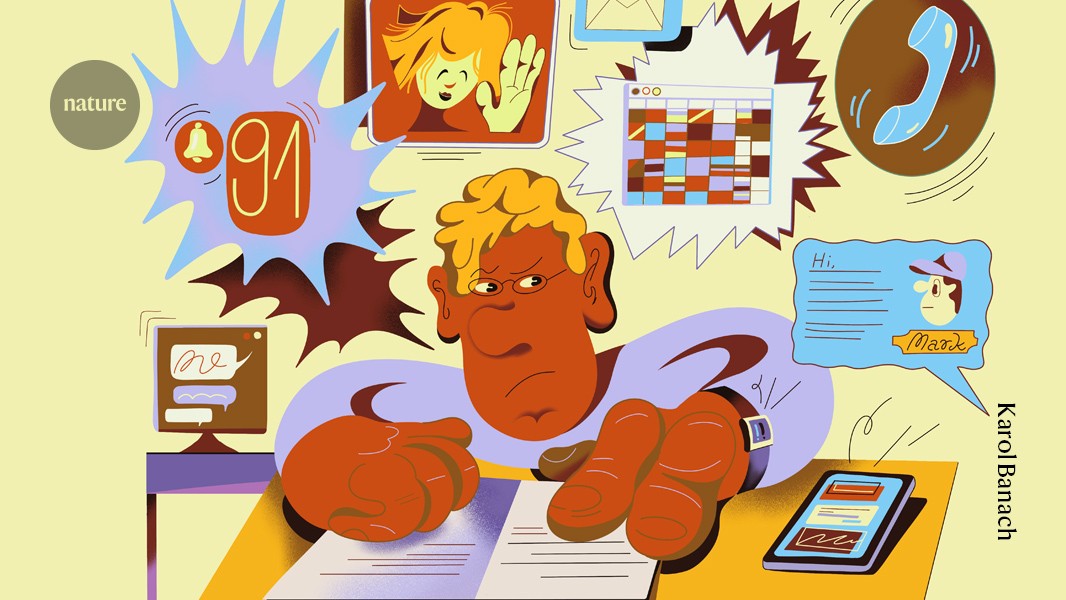
You open a browser tab to read an article, and within seconds, your phone buzzes with a notification. You check it "just quickly" — and twenty minutes later, you finally return to what you were doing. Sound familiar?
This scenario has become so common that we’ve developed a collective assumption: human attention spans are shrinking. Tech executives, educators, and parents alike warn that our ability to focus is deteriorating faster than ever before.
But here’s the question that matters: is this actually true?
The answer might surprise you.
The Myth of the 8-Second Attention Span
You’ve probably heard the statistic: humans now have an attention span shorter than a goldfish. The claim suggests we can only focus for about 8 seconds — down from 12 seconds in the year 2000. It’s a compelling soundbite that has been repeated in countless articles, presentations, and keynote speeches.
There’s just one problem: this statistic has no scientific basis.
The "8-second attention span" claim originated from a 2015 study by Microsoft that surveyed 2,000 Canadians about their media consumption habits. The study never measured actual attention spans or cited goldfish. It was a survey about device usage, not cognitive function.
This myth illustrates a larger issue: when it comes to attention span research, fact and fiction often get blurred.
What the Actual Research Shows
Let’s look at what peer-reviewed scientific studies have found about attention spans over time.
Attention Span Is Task-Dependent, Not Fixed
One of the most consistent findings in cognitive psychology is that attention span varies dramatically based on what you’re doing. We’re perfectly capable of focusing for hours on activities we find engaging — video games, solving puzzles, or watching compelling content.
Research from the University of California, Irvine found that it takes an average of 23 minutes to return to a task after an interruption. This suggests the real issue isn’t a shrinking attention span, but rather our environment’s tendency to constantly interrupt us.
The "Attention Economy" Is Real, But Complicated
Dr. Gloria Mark, a researcher at UC Irvine who has studied attention for decades, found something interesting in her longitudinal studies. While people report higher levels of distraction in the digital age, their ability to focus when needed hasn’t fundamentally changed.
"People are not losing the ability to pay attention," Mark noted in her research. "They’re adapting to a different environment."
There May Be Some Decline, But It’s Nuanced
Not all research points in the same direction. Some studies have found modest decreases in sustained attention performance, particularly in laboratory settings designed to measure it. However, these findings are:
- Small in magnitude — not the dramatic collapse often portrayed in media
- Context-dependent — often tied to specific testing conditions
- Not necessarily permanent — attention can be trained and improved
Why We Think Attention Spans Are Shrinking
If the science doesn’t support the widespread narrative, why does it feel so true? Several factors explain this perception:
1. Availability Heuristic
We judge probability based on how easily examples come to mind. When we can’t focus, we remember it vividly. When we do focus successfully, it doesn’t register as noteworthy. This creates a biased perception.
2. Increased Monitoring
We now have more opportunities than ever to notice our own distraction. Smartphones track screen time; apps notify us of our habits. This data makes us more aware of every moment we spend not focusing.
3. Environmental Changes
While our brains haven’t changed much, our environment has transformed completely. Notifications, infinite scroll, algorithmic content, and always-on connectivity create unprecedented distractions. The issue isn’t our attention capacity — it’s the attention economy fighting for our focus.
4. Multitasking Myths
Many people believe they’re good at multitasking. Research consistently shows this isn’t true. When we switch between tasks, we lose time and efficiency. This creates the feeling of reduced attention, even when our actual capacity remains intact.
What Actually Affects Your Ability to Focus
Rather than worrying about whether attention spans are shrinking, focus on factors you can actually control:
Sleep Quality
Poor sleep dramatically impacts attention, memory, and cognitive function. Studies consistently show that even one night of inadequate sleep reduces focus the next day.
Stress Levels
Chronic stress releases cortisol, which impairs prefrontal cortex function — the brain region responsible for sustained attention and focus.
Environment Design
Your surroundings significantly impact your ability to focus. Noise, visual clutter, and interruptions all reduce sustained attention, regardless of your innate capacity.
Practice and Training
Attention is a skill that can be developed. Meditation, focused work sessions, and deliberate practice can all strengthen your ability to sustain attention over time.
Interest and Relevance
We naturally focus longer on things we find interesting or relevant. The "shrinking attention span" often reflects mismatched content rather than reduced capacity.
The Bottom Line
The science suggests a more nuanced reality than the popular narrative. Human attention spans are likely not shrinking in any meaningful, biological sense. What is changing is our environment — it’s now designed to capture and fragment our attention like never before.
The real question isn’t "how can we restore our lost attention span?" but rather "how can we build habits and environments that support focused work in a distracting world?"
The good news? Your attention isn’t broken. It’s just fighting harder than ever for space to breathe.
And that battle? You can absolutely win.

Comments are closed, but trackbacks and pingbacks are open.