

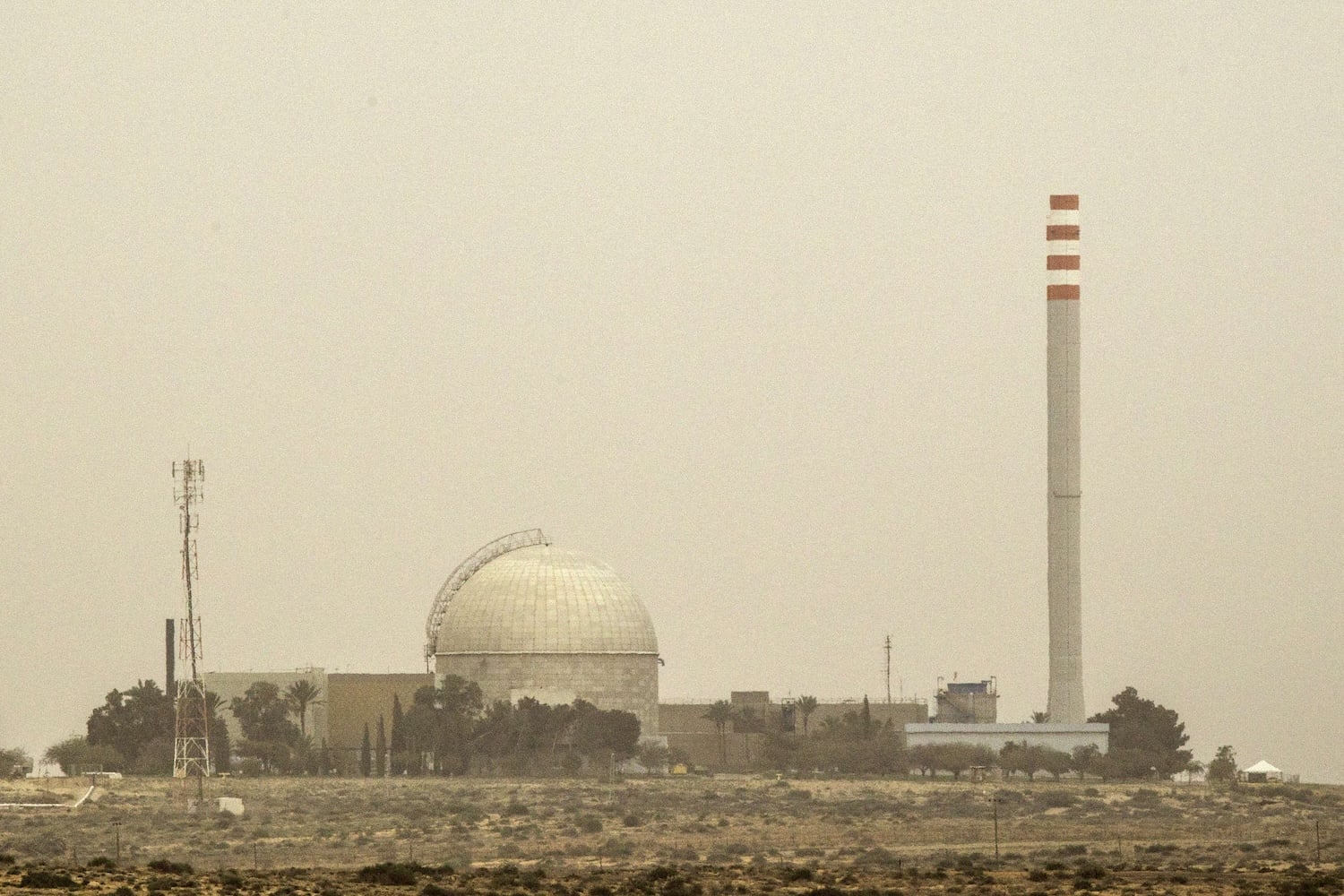
The shadow war between Iran and Israel has reached a critical inflection point, forcing Jerusalem to reconsider its longstanding policy of deliberate ambiguity regarding its nuclear capabilities. For decades, Israel has maintained a carefully crafted posture—neither confirming nor denying possession of nuclear weapons—while implicitly using this ambiguity as a strategic deterrent. However, intensifying Iranian threats and regional tensions are pushing this policy toward its breaking point.
Understanding Israel’s Nuclear Ambiguity
Israel’s policy of nuclear ambiguity, often referred to as the "Samson Option," has been a cornerstone of its Middle Eastern security strategy since the 1960s. This strategic approach serves multiple purposes: it discourages potential aggressors from launching attacks while allowing Israel to maintain plausible deniability on the international stage.
The policy has proven remarkably effective over the years. Neighboring Arab states, despite recognizing Israel’s nuclear capabilities, have been deterred from direct military confrontation. However, the landscape has shifted dramatically in recent years, with Iran emerging as an existential threat that traditional ambiguity may no longer adequately address.
Iran’s Nuclear Escalation and Regional Threats
Iran’s accelerating nuclear program represents the most significant challenge to regional stability in decades. Tehran’s advancement of uranium enrichment, combined with its inflammatory rhetoric toward Israel, has fundamentally altered the strategic calculus in the Middle East.
The Islamic Republic has repeatedly called for Israel’s destruction, supported proxy forces across the region, and expanded its ballistic missile capabilities. These actions, coupled with its nuclear progress, have led many Israeli security analysts to question whether traditional deterrence mechanisms remain sufficient.
Recent Iranian attacks on Israeli territory have demonstrated Tehran’s willingness to escalate direct confrontations. This represents a qualitative change in the threat environment that cannot be ignored by Israeli defense planners.
Shifting Public Discourse in Israel
Internal debates about nuclear transparency have intensified within Israel. Former military officials and security experts increasingly advocate for a more explicit nuclear posture, arguing that ambiguity no longer serves its original deterrent purpose against an Iran that appears undeterred by implied threats.
Public opinion polls indicate growing support among Israeli citizens for explicit nuclear acknowledgment. The logic is straightforward: if Iran’s leadership doubts Israel’s willingness to use all available means of self-defense, they may calculate that regional aggression carries acceptable risks.
Political leaders who previously avoided nuclear话题 are now engaging in more direct discussions about deterrence requirements. This represents a significant shift in Israeli public discourse that reflects changing security perceptions.
International Implications and Concerns
The potential erosion of Israeli nuclear ambiguity has profound implications for international non-proliferation efforts. Western allies, particularly the United States, have traditionally supported Israel’s ambiguous posture as a pragmatic compromise that maintained regional stability.
However, the current regional dynamics present challenges to this approach. International diplomats worry that explicit nuclear acknowledgment by Israel could trigger a新一轮 regional arms race, with Saudi Arabia and other states seeking their own nuclear capabilities.
The Iran nuclear deal (JCPOA) negotiations remain deadlocked, further complicating the strategic picture. Without a comprehensive agreement constraining Iran’s nuclear program, regional actors face difficult decisions about their own security arrangements.
What Comes Next
The trajectory suggests Israel will continue moving toward greater nuclear transparency, though the exact pace and form remain uncertain. Military leadership appears increasingly convinced that unambiguous deterrence is necessary against Iranian threats.
Several scenarios could unfold in the coming months. Israel might formally acknowledge its nuclear capabilities, conduct visible military exercises demonstrating strategic readiness, or pursue diplomatic channels that implicitly confirm existing capabilities while avoiding explicit statements.
Whatever path Jerusalem chooses, the era of strategic ambiguity that has defined Middle Eastern security for generations appears increasingly unsustainable. The Iran war has fundamentally changed the strategic environment, forcing difficult decisions that were previously avoidable.
Conclusion
The erosion of Israel’s nuclear ambiguity represents one of the most significant developments in Middle Eastern security in decades. As Iranian threats continue to escalate, the strategic calculations that once justified deliberate opacity no longer apply. While the exact form of Israel’s future nuclear posture remains unclear, the direction of travel is evident: toward a more explicit acknowledgment of capabilities designed to deter an increasingly aggressive Tehran.
The international community must recognize that this shift is a response to genuine security threats, not a welcome development. Until Iran’s nuclear program is adequately addressed through diplomacy or other means, regional states will continue taking necessary measures to ensure their survival.

Comments are closed, but trackbacks and pingbacks are open.