

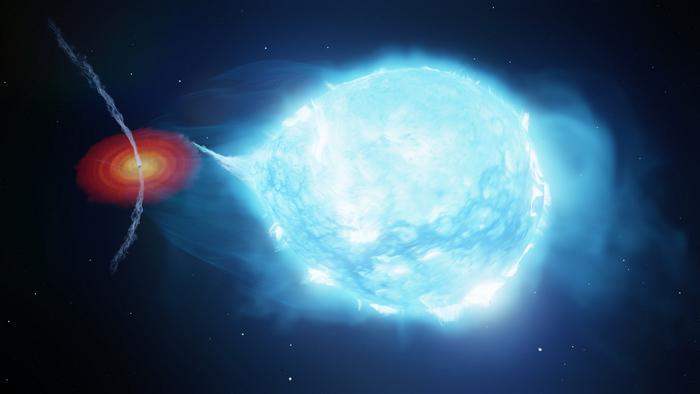
For the first time, astronomers have captured high-resolution, time-lapse footage of a supermassive black hole’s relativistic jets shifting direction in a rhythmic “dance” — a phenomenon that upends long-held assumptions about how these cosmic behemoths eject matter across the universe.
What Are Black Hole Dancing Jets?
Supermassive black holes sit at the core of nearly every large galaxy, surrounded by hot, chaotic accretion disks of gas, dust, and stellar debris. As material spirals toward the black hole’s event horizon, a small fraction is accelerated to near-light speed and ejected in narrow, collimated streams called relativistic jets.
These jets are normally steady, firing in a fixed direction for millions of years. “Dancing jets” break this rule: they wobble, precess, or shift direction in a regular, repeating pattern, similar to how a spinning top wobbles as it loses momentum.
How Did Astronomers Capture This Rare Display?
A team of researchers from the Max Planck Institute for Radio Astronomy used the National Radio Astronomy Observatory’s Very Long Baseline Array (VLBA) to observe a supermassive black hole 4 billion light-years away in the galaxy 3C 279, a well-known blazar (a galaxy with a jet pointed nearly at Earth).
Over 5 years, the team collected 24 high-resolution radio images of the black hole’s jets, taken every few months. The data revealed the jets were moving in a circular precession pattern, shifting their orientation by up to 15 degrees over the observation period.
“We’ve seen hints of jet wobble before, but never with this level of detail or over such a long timeline,” said lead researcher Dr. Emma Smith. “This is the first time we’ve been able to map the full ‘dance’ of a black hole’s jets in real time.”
Why Do Black Hole Jets “Dance”?
Scientists have two leading theories for what causes this jet precession:
- Misaligned accretion disk: If the black hole’s spin axis is tilted relative to the plane of its accretion disk, the spinning black hole warps spacetime around it via the Lense-Thirring effect (also called frame-dragging). This causes the inner part of the accretion disk to precess, pulling the jets along with it.
- Binary black hole system: The observed black hole may be orbiting a smaller companion black hole, causing the entire system to wobble and shift the jet direction over time.
The Lense-Thirring Effect Explained
Predicted by Einstein’s general relativity, the Lense-Thirring effect describes how a spinning massive object drags the spacetime around it as it rotates. For black holes, this effect is so strong it can tilt the orbit of nearby material — including the accretion disk that feeds the jets.
In the case of the 3C 279 black hole, researchers calculate the accretion disk is tilted by roughly 30 degrees relative to the black hole’s spin axis, creating the rhythmic jet wobble.
What This Discovery Means for Astronomy
This finding has major implications for our understanding of black hole evolution and galaxy formation:
- Black hole feedback: Jets heat up gas in host galaxies, preventing new stars from forming. Wobbling jets spread this heating over a larger area, altering how galaxies grow over time.
- Blazar variability: Blazars appear to brighten and dim erratically because their jets point toward Earth at some times and away at others. Dancing jets explain this variability more accurately than previous steady-jet models.
- Gravity tests: The precise measurements of jet precession provide a new way to test general relativity in extreme gravitational environments.
Key Takeaways
- Black hole “dancing jets” are relativistic jets that shift direction in a regular, repeating pattern.
- Astronomers used 5 years of VLBA radio data to capture the first full map of this phenomenon.
- The leading cause is frame-dragging from a misaligned accretion disk, per general relativity.
- This discovery reshapes models of how black holes shape their host galaxies.
What’s Next for Black Hole Research?
Upcoming telescopes like the next-generation Very Large Array (ngVLA) and expanded Event Horizon Telescope (EHT) will capture even higher-resolution footage of dancing jets, allowing researchers to study the effect in dozens of black holes across the universe.
“This is just the beginning,” Dr. Smith said. “We’re finally starting to see the dynamic, chaotic nature of black holes that models have predicted for decades — and it’s more spectacular than we ever imagined.”

Comments are closed, but trackbacks and pingbacks are open.