

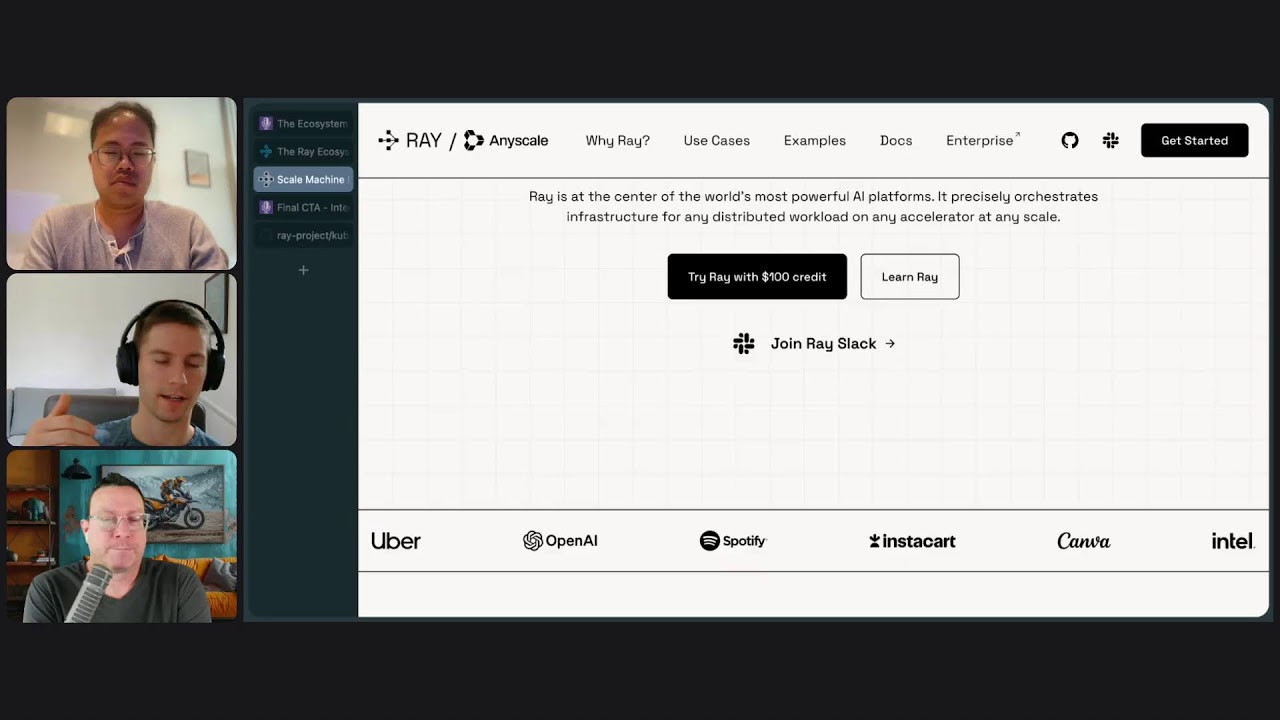
Talk Python to Me Episode 547: Parallel Python at Anyscale with Ray
If you’re a Python developer looking to take your applications to the next level, you need to hear about Ray. In episode 547 of Talk Python to Me, host Michael Kennedy sits down with the experts at Anyscale to discuss how Ray is revolutionizing parallel and distributed computing in Python.
What is Ray?
Ray is an open-source distributed computing framework designed specifically for Python. It provides a simple yet powerful API that allows developers to parallelize and distribute their Python code across multiple machines with minimal code changes. Whether you’re running machine learning workloads, data processing pipelines, or reinforcement learning simulations, Ray makes it incredibly easy to scale your applications.
The framework handles all the complex details of distributed computing, including task scheduling, resource management, and fault tolerance. This means you can focus on writing your business logic while Ray takes care of the heavy lifting.
What is Anyscale?
Anyscale is the company behind Ray, founded by the same researchers who created the framework at UC Berkeley’s RISELab. They provide a managed platform that makes it even easier to deploy and scale Ray applications in production. With Anyscale, you can run your distributed Python applications on cloud infrastructure without worrying about cluster management or infrastructure overhead.
Key Topics Discussed in Episode 547
This episode dives deep into the world of parallel Python computing. Here are the main topics covered:
- Introduction to Ray: Understanding the basics of Ray and its architecture
- Parallel Python Patterns: Common patterns for parallelizing Python code using Ray
- Machine Learning at Scale: How Ray integrates with popular ML frameworks like TensorFlow and PyTorch
- Reinforcement Learning: Using Ray for RL workloads and the Ray RLlib library
- Anyscale Platform: How Anyscale simplifies deploying Ray applications in production
- Performance Optimization: Tips and best practices for getting the most out of your distributed Python code
- Real-World Use Cases: Examples of companies successfully using Ray and Anyscale
Why Python Developers Should Care About Parallel Computing
As Python applications grow in complexity and data volume, traditional single-threaded approaches often fall short. Parallel computing allows you to:
- Process larger datasets: Distribute data processing across multiple machines
- Train ML models faster: Parallelize training across multiple GPUs and machines
- Reduce latency: Execute independent tasks simultaneously
- Scale horizontally: Add more machines to handle increased workload
Ray makes all of this accessible to Python developers without requiring expertise in distributed systems.
Getting Started with Ray
If you’re new to Ray, getting started is straightforward. You can install Ray using pip:
pip install rayThen you can begin parallelizing your Python code with simple decorators and function calls. The Ray documentation provides excellent tutorials for beginners, covering everything from basic task parallelization to advanced machine learning workloads.
Conclusion
Episode 547 of Talk Python to Me is a must-listen for any Python developer interested in scaling their applications. Whether you’re working on machine learning, data processing, or any compute-intensive task, Ray and Anyscale provide powerful tools to help you achieve your goals.
Listen to the full episode on Talk Python to Me to learn directly from the experts about how to leverage parallel Python computing in your projects. The insights shared in this episode could transform how you approach scaling your Python applications.

Comments are closed, but trackbacks and pingbacks are open.