

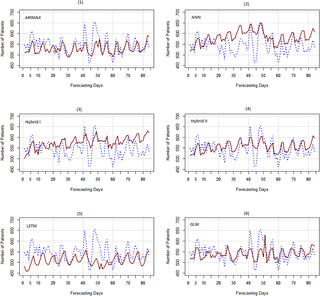
Emergency departments (EDs) face constant pressure to balance patient care with operational efficiency. One of the biggest challenges hospital administrators face is predicting how many patients will walk through their doors each day. Accurate forecasting of daily patient arrivals can mean the difference between adequate staffing and dangerous overcrowding.
Traditional forecasting methods have served healthcare systems for decades, but they often fall short when dealing with the complex, nonlinear patterns inherent in emergency department traffic. This is where innovative approaches like the hybrid ARIMAX-ANN algorithm come into play, offering a powerful solution that combines the best of both statistical and machine learning methodologies.
Understanding the Forecasting Challenge
Emergency department patient arrivals don’t follow simple, predictable patterns. They fluctuate based on numerous factors including:
- Time of day and day of week – Mondays typically see higher volumes than weekends
- Seasonal variations – Flu seasons and summer injuries create predictable spikes
- Weather conditions – Extreme temperatures correlate with increased visits
- Community events – Local festivals or sporting events can strain local ED resources
- Economic factors – Unemployment rates affect non-emergency utilization
These interrelated variables create a forecasting challenge that requires sophisticated analytical approaches capable of capturing both linear trends and complex nonlinear relationships.
What is the ARIMAX-ANN Hybrid Algorithm?
The hybrid ARIMAX-ANN algorithm represents a significant advancement in time series forecasting by combining two distinct but complementary methodologies.
ARIMAX Component
ARIMAX (AutoRegressive Integrated Moving Average with Exogenous Variables) builds upon the well-established ARIMA model by incorporating external predictor variables. This statistical approach excels at:
- Capturing linear trends and seasonal patterns
- Accounting for autocorrelation in historical data
- Incorporating external factors like weather or day of week
- Providing interpretable results with confidence intervals
However, ARIMAX struggles with nonlinear relationships and complex interactions between variables – precisely the kind of patterns that often appear in healthcare data.
ANN Component
Artificial Neural Networks (ANN) bring machine learning capabilities to the forecasting process. Their strengths include:
- Learning complex nonlinear patterns automatically
- Adapting to changing data distributions
- Capturing subtle interactions between multiple variables
- Improving accuracy through iterative learning
By combining these two approaches, the hybrid model leverages the structural stability of ARIMAX while gaining the flexibility of neural networks.
How the Hybrid Algorithm Improves Forecast Accuracy
Research has consistently shown that hybrid ARIMAX-ANN models outperform either methodology alone when forecasting emergency department patient arrivals. Here’s how this improvement works:
Complementary Strengths
The ARIMAX component captures the predictable, linear components of patient arrival patterns – the weekly cycles, seasonal trends, and clear cause-and-effect relationships. Meanwhile, the ANN component picks up the nonlinear elements that traditional statistics miss – the subtle interactions between variables and unexpected shifts in patient behavior.
Residual Analysis
One effective implementation strategy involves using ARIMAX to generate initial forecasts, then applying the ANN model to analyze and correct the residuals (the differences between predicted and actual values). This two-stage approach allows each algorithm to focus on what it does best.
Variable Integration
The hybrid approach can incorporate a wider range of external variables than either method alone. This includes:
- Historical patient volume data
- Calendar features (holidays, weekends)
- Weather data (temperature, precipitation)
- Epidemiological indicators
- Local healthcare facility capacity
Real-World Benefits for Healthcare Systems
Implementing accurate forecasting through hybrid algorithms delivers tangible benefits across multiple dimensions of emergency department operations.
Staffing Optimization
Perhaps the most immediate impact comes from improved staffing decisions. Hospital administrators can schedule appropriate nurse-to-patient ratios based on predicted volume, reducing both understaffing risks and unnecessary labor costs.
Resource Allocation
Beyond staffing, accurate forecasts inform decisions about:
- Bed availability and ward capacity
- Medical equipment placement
- Supply inventory levels
- Specialist on-call scheduling
Patient Care Quality
When departments are adequately prepared for patient volumes, wait times decrease, treatment quality improves, and patient satisfaction scores rise. Overcrowding – a major contributor to medical errors and patient dissatisfaction – becomes less likely.
Cost Management
Healthcare systems operate on tight margins. Better forecasting reduces waste from overstaffing while preventing costly emergency measures to address understaffing. The financial benefits compound over time as systems refine their forecasting models.
Implementation Considerations
Healthcare organizations looking to implement hybrid forecasting should consider several factors:
Data Requirements
Successful implementation requires access to quality historical data – ideally several years of daily patient arrival records along with relevant external variables. Data cleaning and preprocessing are essential first steps.
Technical Expertise
While commercial software packages exist, maximizing the benefits of hybrid ARIMAX-ANN modeling typically requires data science expertise. Many organizations partner with academic institutions or specialized consultants during implementation.
Continuous Improvement
Forecasting models require ongoing refinement. As patient patterns evolve and new variables emerge, models must be retrained and recalibrated to maintain accuracy.
The Future of ED Forecasting
The hybrid ARIMAX-ANN approach represents a significant step forward in emergency department forecasting, but the evolution continues. Emerging technologies like deep learning and real-time data integration promise even greater accuracy in the years ahead.
For healthcare administrators facing the daily challenge of matching resources to patient needs, these advanced forecasting methods offer a clear path to improved operational efficiency and, most importantly, better patient outcomes.
The question is no longer whether sophisticated forecasting methods can improve emergency department operations – the evidence is clear. The question is how quickly healthcare systems will adopt these tools to transform their planning and patient care capabilities.

Comments are closed, but trackbacks and pingbacks are open.