
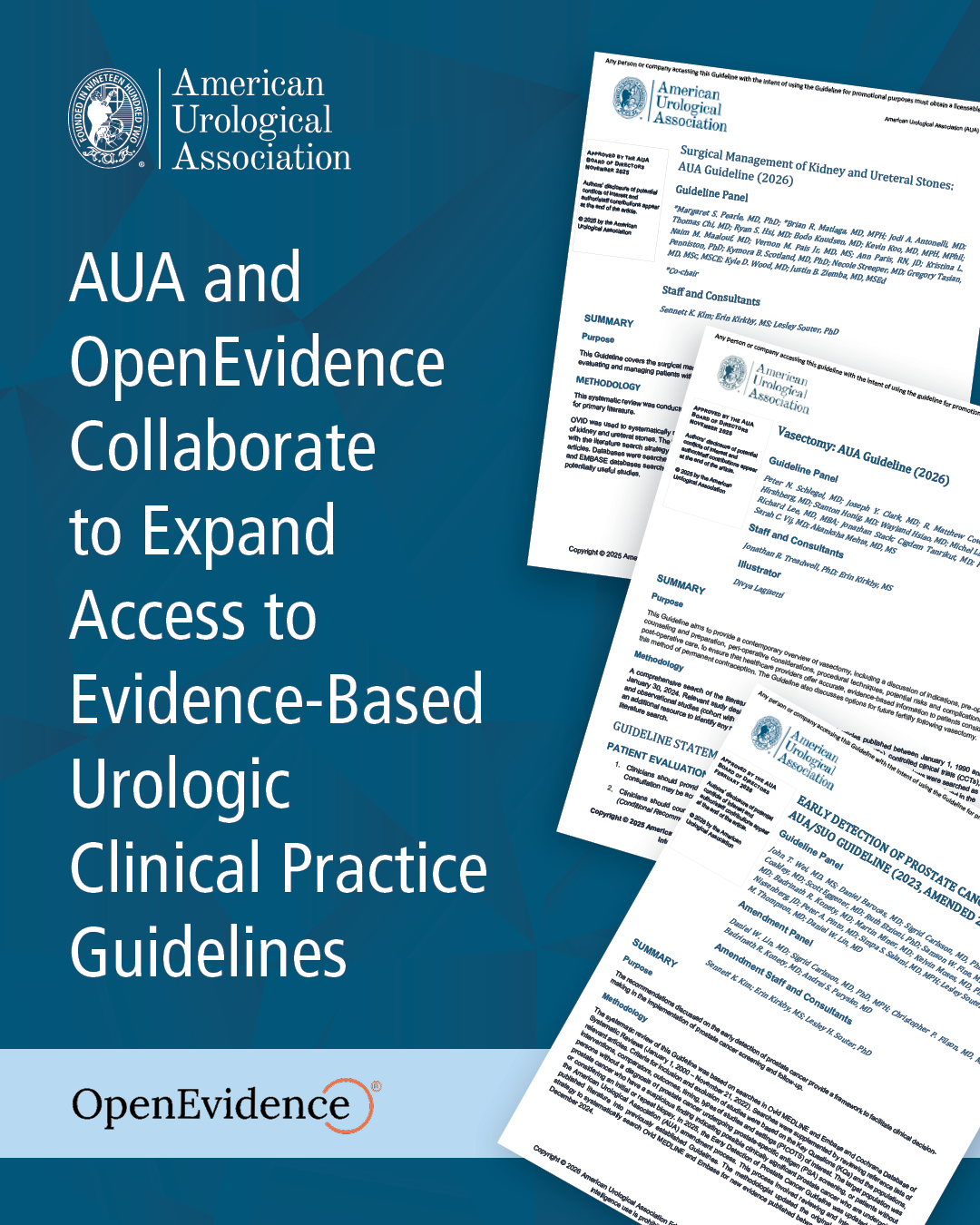
AUA and OpenEvidence Collaborate to Expand Access to Evidence‑Based Urologic Clinical Practice Guidelines

Why This Collaboration Matters
The American Urological Association (AUA) has taken a decisive step toward greater transparency and accessibility by teaming up with OpenEvidence, a nonprofit dedicated to democratizing medical research. Together, they aim to make evidence‑based urologic clinical practice guidelines readily available to every clinician, researcher, and patient.
What Is OpenEvidence?
OpenEvidence is an open‑access platform that aggregates, curates, and visualizes the latest peer‑reviewed studies, systematic reviews, and guideline recommendations. Its user‑friendly interface lets users:
- Search by disease, procedure, or keyword.
- View interactive evidence maps that link recommendations to underlying studies.
- Download guideline summaries in PDF, HTML, or machine‑readable formats.
Key Benefits for Urologic Care
1. Faster Access to the Latest Recommendations
Clinicians no longer need to navigate multiple websites or subscription‑only journals. All AUA guideline updates are posted on OpenEvidence within 24 hours of release.
2. Evidence Transparency
Each recommendation now includes direct links to the supporting trials, meta‑analyses, and confidence‑interval data. This empowers physicians to understand the strength of the evidence before applying it to patient care.
3. Patient‑Centric Resources
OpenEvidence provides simplified, lay‑language summaries that patients can download or share with their families, fostering shared decision‑making.
How the Integration Works
The technical workflow is built around three core steps:
- Guideline Publication: The AUA finalizes a guideline and uploads the PDF and supporting data files to a secure server.
- Metadata Extraction: OpenEvidence’s AI‑driven parser extracts key data points—population, interventions, outcomes, and strength of recommendation.
- Public Release: The parsed content is displayed on the OpenEvidence portal and indexed for search engines, ensuring discoverability.
What This Means for Different Stakeholders
- Urologists & Residents: Immediate, searchable access to the most current evidence for practice‑changing decisions.
- Researchers: A centralized repository of guideline citations that speeds literature reviews.
- Healthcare Administrators: Ability to audit compliance with evidence‑based protocols across facilities.
- Patients & Advocates: Free, plain‑English summaries that demystify complex urologic conditions.
Launching the First Set of Guidelines
The partnership debut features three high‑impact AUA guidelines:
- Management of Benign Prostatic Hyperplasia (BPH)
- Guidelines for Upper Tract Urothelial Carcinoma
- Best Practices for Post‑Operative Pain Control in Endoscopic Surgery
Each is fully integrated into OpenEvidence, complete with evidence maps and downloadable cheat sheets.
Future Roadmap
The collaboration will expand to cover:
- Real‑time alerts for guideline revisions.
- Interactive case simulations that apply guideline recommendations to virtual patients.
- Multilingual translations to serve global urology communities.
Conclusion
By joining forces, the AUA and OpenEvidence are setting a new standard for how clinical practice guidelines are disseminated and used. This model not only accelerates the diffusion of high‑quality evidence but also strengthens the partnership between clinicians and patients, ultimately leading to better urologic outcomes.

Comments are closed, but trackbacks and pingbacks are open.