

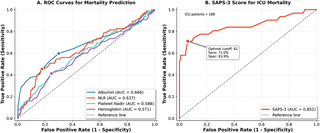
Dengue fever is no longer just a tropical nuisance – it’s a fast-growing global health threat, with over 100 million cases reported annually. But while most patients recover with supportive care, up to 5% develop severe, life-threatening complications. A new large-scale study of 1,484 hospitalized dengue patients is shedding light on the factors that separate mild cases from fatal ones, including surprising patterns of liver damage and a counterintuitive "steatotic liver paradox" that’s upending previous clinical assumptions.
Study Overview: 1,484 Hospitalized Dengue Patients
Researchers analyzed de-identified records of 1,484 adults and children hospitalized with confirmed dengue infection across 3 tertiary care centers over a 2-year period. The team tracked three core outcomes:
- Clinical predictors of in-hospital mortality
- Patterns of hepatic (liver) involvement across dengue severity grades
- Outcomes for patients with pre-existing steatotic liver disease (SLD, or fatty liver) compared to those without
Critical Mortality Predictors in Hospitalized Dengue Patients
Top Modifiable and Non-Modifiable Risk Factors
- Advanced age (≥60 years) – 3x higher mortality risk than patients under 30
- Pre-existing chronic liver disease (excluding steatosis) – 4.2x higher fatality rate
- Delayed hospital admission (≥3 days after symptom onset) – 2.7x increased risk
- Severe thrombocytopenia (platelet count <20,000/μL) – strong independent predictor of death
- Concurrent bacterial co-infection – doubled mortality risk vs. isolated dengue cases
Warning Signs That Signal High Mortality Risk
- Persistent vomiting unresponsive to medication
- Rapidly rising liver enzymes (AST/ALT >1000 IU/L)
- Altered mental status or seizures
- New-onset ascites (fluid buildup in the abdomen)
- Systolic blood pressure <90 mmHg on admission
Hepatic Involvement Patterns Across Dengue Severity
Liver damage is one of the most common complications of severe dengue, but the study revealed clear patterns tied to disease grade:
- Mild dengue: 62% of patients had mild, transient elevation of liver enzymes (AST/ALT 2-5x upper limit of normal), with no long-term liver damage
- Dengue with warning signs: 89% had moderate enzyme elevation (5-10x ULN), 12% developed acute hepatitis
- Severe dengue: 94% had severe hepatic involvement, including 18% with acute liver failure, 7% with liver necrosis
Why Liver Damage Occurs in Dengue
Dengue virus directly infects hepatocytes (liver cells) and triggers widespread inflammation, which disrupts normal liver function. The study confirmed that hepatic involvement is not just a side effect – it’s a core driver of severe disease progression.
The Steatotic Liver Paradox: A Surprising Finding
One of the most unexpected findings of the study was the "steatotic liver paradox": patients with pre-existing steatotic liver disease (fatty liver) had a 40% lower risk of in-hospital mortality than patients with normal livers, even after adjusting for age, comorbidities, and dengue severity.
Researchers hypothesize this paradox stems from two factors:
- Steatotic livers have higher baseline levels of certain anti-inflammatory cytokines that may blunt the excessive immune response (cytokine storm) that drives severe dengue complications
- Patients with known fatty liver disease are more likely to seek care earlier and receive closer monitoring for liver-related complications, leading to earlier intervention
Limitations of the Paradox Finding
- The protective effect only applied to patients with mild-to-moderate steatosis, not severe fatty liver disease
- Patients with steatosis plus other chronic liver conditions (e.g., cirrhosis) did not see the same mortality benefit
- Larger prospective studies are needed to confirm the mechanism behind the paradox
Clinical Implications for Healthcare Providers
The study’s findings offer clear, actionable steps for clinicians treating dengue patients:
- Prioritize early liver function testing for all hospitalized dengue patients, even those with mild initial symptoms
- Flag patients with delayed admission, low platelets, or pre-existing chronic liver disease for intensive monitoring
- Do not assume patients with fatty liver are at higher risk – the paradox suggests they may have better outcomes, but still require standard care
- Educate patients on early warning signs of severe dengue to reduce delayed hospital presentation
Conclusion
This large-scale analysis of 1,484 hospitalized dengue patients provides actionable insights for clinicians working in dengue-endemic regions. By identifying clear mortality predictors and mapping hepatic involvement patterns, the study helps providers triage high-risk patients earlier. The steatotic liver paradox adds a new layer of complexity to dengue risk stratification, challenging long-held assumptions about pre-existing liver conditions and dengue outcomes. As dengue continues to spread to new regions, findings like these will be critical to reducing preventable deaths from this growing global threat.

Comments are closed, but trackbacks and pingbacks are open.