

What Would Happen If The Carrington Event Of 1859 Hit Again Today?: ‘Keeps Me Up At Night’
Imagine waking up to a sky blazing with blood-red auroras visible as far south as Cuba and Hawaii. Your phone dies first, then the lights flicker and go out.
Within hours, cell towers fail, hospitals lose backup power, and global supply chains grind to a halt. This isn’t a scene from a sci-fi movie — it’s exactly what happened in 1859 during the Carrington Event, the most powerful solar storm ever recorded.
As former NASA administrator Jim Bridenstine once said, "Space weather is a threat that keeps me up at night." For good reason: a repeat of the 1859 Carrington Event today would be catastrophic for our hyper-connected world.
What Was the 1859 Carrington Event?
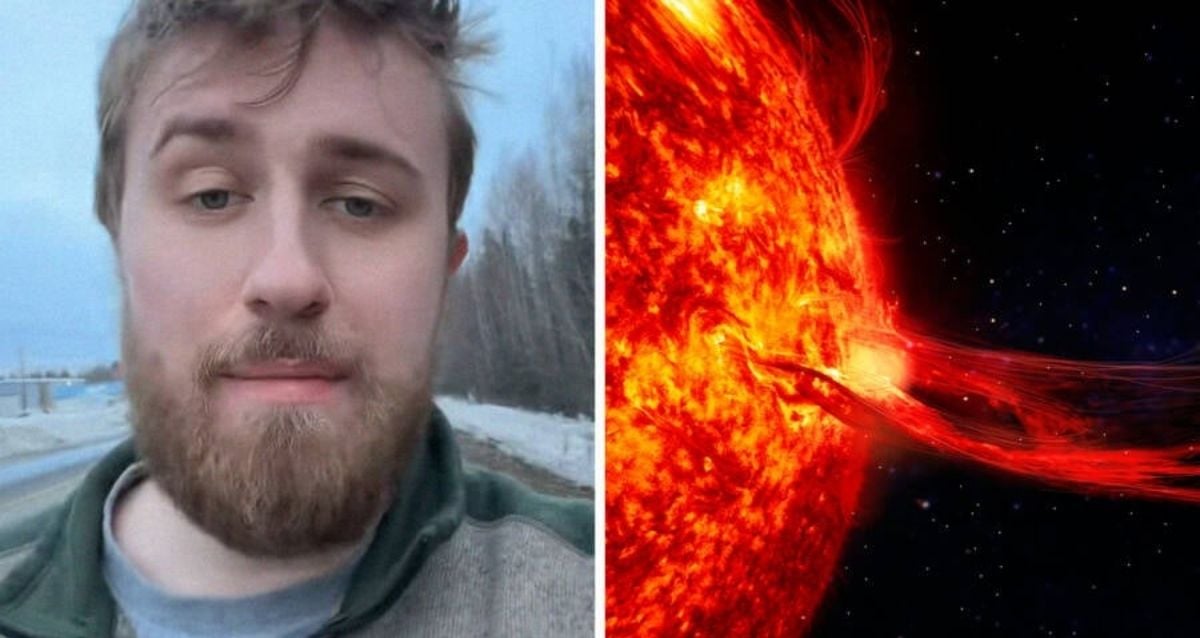
In September 1859, British astronomer Richard Carrington observed a massive solar flare erupt from the Sun’s surface. Just 17 hours later (far faster than the typical 3-day travel time for solar ejecta), a coronal mass ejection (CME) slammed into Earth’s magnetosphere.
The result was a geomagnetic storm so powerful that auroras lit up the night sky worldwide, visible even near the equator in Cuba, Hawaii, and Mexico.
Telegraph systems — the only electronic technology of the era — failed globally. Operators reported electric shocks, sparks flying from telegraph equipment, and even paper tape catching fire from induced currents.
How Is Today’s World More Vulnerable Than 1859?
The 1859 world had no electric power grid, no cell phones, no GPS, no internet, and no digital financial systems. Today, every critical system we rely on runs on electronics vulnerable to geomagnetic disturbances.
Our infrastructure is deeply interdependent: a failure of the power grid triggers failures in communication, transportation, healthcare, and supply chains within hours.
Our Hyper-Connected Power Grids
Modern high-voltage power grids span continents, with long transmission lines that act as giant antennas for geomagnetically induced currents (GICs).
These currents can fry high-voltage transformers, massive pieces of equipment that take 1–3 years to manufacture and cost millions of dollars each. Only a handful of global factories produce them.
Satellite and GPS Dependence
Over 5,000 active satellites orbit Earth, supporting GPS, global communications, weather forecasting, and military operations. A Carrington-level CME would disable most of these within hours.
Without GPS, aviation, shipping, and emergency response systems would collapse. Farmers, ride-share drivers, and delivery services would all lose their navigation tools instantly.
Digital Infrastructure Reliance
Banks, stock markets, and hospitals all run on digital systems that require constant power and internet access. No power means no electronic health records, no digital payments, and no 911 dispatch systems.
Even short power outages can cost billions of dollars. A months-long blackout would upend modern civilization as we know it.
What Would Happen If the Carrington Event Hit Today?
Experts like those at NASA, the National Oceanic and Atmospheric Administration (NOAA), and Lloyd’s of London have modeled the impacts of a Carrington-level event hitting modern Earth. The results are alarming.
Immediate Impacts (0–72 Hours)
- Blood-red auroras visible as far south as the tropics, visible even in daylight in some regions
- Widespread power grid failures across North America, Europe, and Asia, affecting billions of people
- Total failure of GPS and communication satellites, knocking out navigation and global internet backbones
- Cell towers and landline networks fail as backup batteries die within 24 hours
- Hospitals lose main power; backup generators fail if regional fuel supply chains are cut
Medium-Term Impacts (1 Week–3 Months)
- Grocery store food spoils as refrigeration fails; supply chains break, leading to widespread food and water shortages
- Financial systems collapse: ATMs, digital payments, and stock markets go offline, wiping out access to savings
- Healthcare crises: no medical equipment, lost patient records, and failed medication supply chains lead to excess deaths
- Civil unrest: panic buying, looting, and strained emergency services as governments struggle to respond
Long-Term Impacts (3 Months–10 Years)
- Replacement of damaged high-voltage transformers takes 1–3 years each, with global manufacturing capacity already stretched thin
- Lloyd’s of London estimates global GDP could drop by 20–40% in the first year alone, costing up to $40 trillion
- Decades of work needed to rebuild full digital and power infrastructure, especially in developing nations
- Geopolitical instability as countries scramble for limited resources and manufacturing capacity
Could We Prepare for a Carrington-Level Event?
While we can’t prevent solar storms, we can harden our infrastructure to reduce their impact. Experts recommend several key steps:
- Upgrade power grids with GIC-blocking devices and storm-resistant high-voltage transformers
- Expand early warning systems: NASA’s DSCOVR satellite provides 15–60 minutes of warning before a CME hits Earth
- Harden critical satellites and ground infrastructure against solar radiation and induced currents
- Develop offline backup systems for hospitals, banks, and emergency response agencies
- Strengthen international cooperation to share resources and manufacturing capacity during a disaster
Why Experts Say This Threat Is Urgent
Carrington-level solar storms are not rare: they occur every 100–200 years on average. We are now 164 years since the 1859 event, meaning we are well within the window for another major storm.
The last major geomagnetic storm in 1989 knocked out power to 6 million people in Quebec for 9 hours. A Carrington-level event would be 10 times more powerful than that 1989 storm.
"It’s not a matter of if, but when," says Dr. Thomas Bogdan, former director of NOAA’s Space Weather Prediction Center. "We need to act now to protect our critical infrastructure before it’s too late."
Conclusion
The 1859 Carrington Event was a wake-up call that we ignored for too long. Today, our hyper-connected world faces existential risk from space weather that we are woefully underprepared for.
While the threat is scary, it’s not inevitable that a Carrington-level event will cause global collapse. With proper preparation and investment in resilient infrastructure, we can weather the next big solar storm.
The time to act is now — before the lights go out for good.

Comments are closed, but trackbacks and pingbacks are open.